BigEndian Semiconductors Secures ₹130 Crore Government Support to Build Indigenous AI Vision SoC
By Sanjay Patel | Published October 6, 2026 | 8 min read

Bengaluru semiconductor startup BigEndian secures ₹130 crore government backing under DLI scheme to tape out an indigenous edge AI Vision SoC for surveillance and robotics.
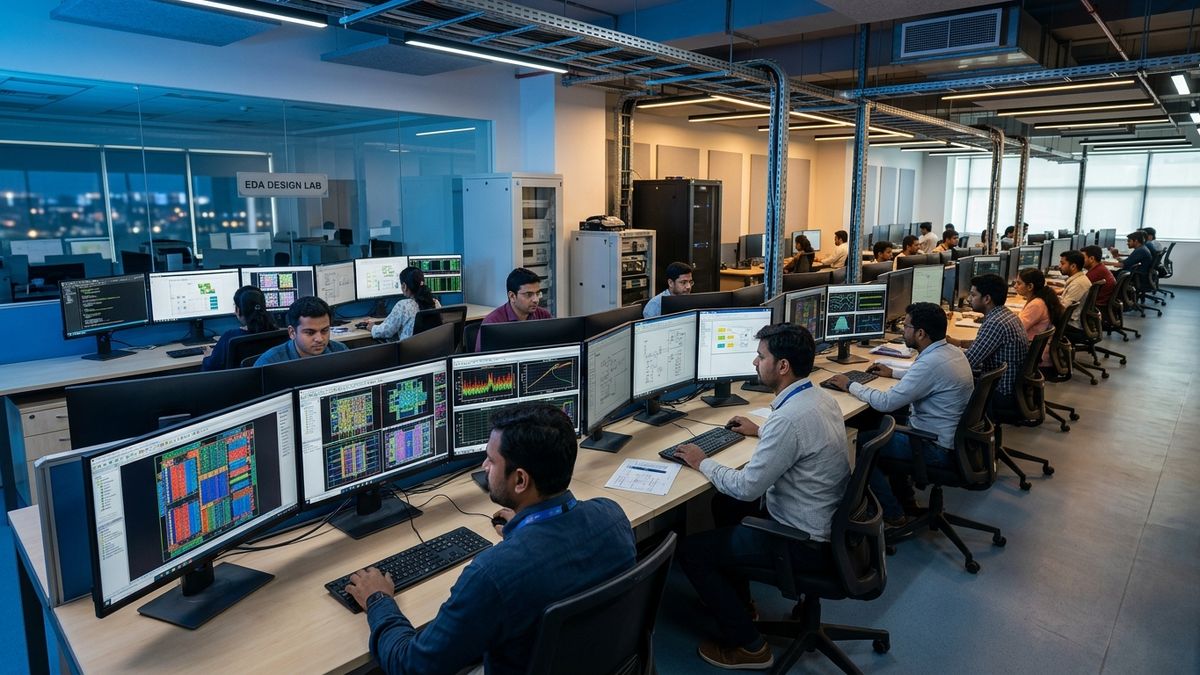
Bengaluru-based fabless semiconductor venture BigEndian Semiconductors has secured ₹130 crore in strategic government support, backed by the Ministry of Electronics and Information Technology (MeitY) under the India Semiconductor Mission's (ISM) Design Linked Incentive (DLI) scheme. The capital infusion will directly finance the advanced physical tape-out, verification, and high-volume commercial manufacturing of BigEndian's proprietary edge AI Vision System-on-Chip (SoC), purpose-engineered to power next-generation intelligent surveillance systems, industrial automation cameras, and autonomous robotics platforms.
The milestone represents a critical breakthrough in India's sovereign silicon agenda. While domestic policy has channeled tens of billions of dollars toward greenfield semiconductor fabrication plants and assembly-testing-marking-packaging (ATMP) units, fostering domestic fabless design intellectual property (IP) is widely recognized as the highest-margin and technologically decisive segment of the global semiconductor value chain.
Architectural Deep Dive: Inside the BigEndian AI Vision SoC
Modern edge surveillance and robotic vision cameras face severe physical constraints: they must process high-definition multi-channel video streams with sub-millisecond latency, maintain strict thermal boundaries below 5 watts, and operate without constant uplink to cloud servers.
BigEndian has resolved these tradeoffs by co-designing specialized hardware acceleration blocks around an open RISC-V compute core:
- Custom Neural Processing Unit (NPU): A domain-specific matrix multiplication systolic array delivering up to 8 TOPS (Tera Operations Per Second) of INT8 and FP16 compute, optimized for convolutional neural networks (CNNs) and lightweight vision transformers (ViTs).
- Advanced Image Signal Processor (ISP): An integrated high-dynamic-range (HDR) ISP capable of real-time 4K video processing at 60 frames per second, featuring hardware-accelerated 3D noise reduction and extreme low-light photon enhancement.
- RISC-V Application and Control Processors: Fully open-standard 64-bit multi-core RISC-V architecture, freeing the hardware from foreign proprietary instruction set licenses while enabling hardware-level cryptographic isolation.
- Hardware Root of Trust (RoT): Sovereign secure boot, physically unclonable functions (PUF), and encrypted on-chip key storage, eliminating hardware backdoor vulnerabilities.
"A nation cannot secure its physical borders or critical infrastructure using imported silicon whose microcode and logic circuits remain complete black boxes,"emphasized BigEndian's engineering leadership. "This ₹130 crore support validates our vision of establishing sovereign Indian silicon capable of competing head-to-head with global semiconductor incumbents on energy efficiency and neural throughput."
Edge Silicon Benchmark Matrix: BigEndian vs Global Incumbents
The table below contrasts the technical specifications, architectural profiles, and target applications of BigEndian's AI Vision SoC against prominent global edge AI processors:
| Semiconductor Platform | Core Instruction Set | Peak Neural Throughput | Typical Thermal Envelope | Target Production Node | Primary Target Verticals |
|---|---|---|---|---|---|
| BigEndian AI Vision SoC | RISC-V 64-bit Core | Up to 8.0 TOPS (INT8) | 2.5W - 4.5W | 22nm / 28nm FD-SOI | Sovereign Surveillance, Smart Cities, AMR Vision |
| Ambarella CV22 Series | Proprietary ARM Core | ~4.2 TOPS (INT8) | 4.0W - 6.0W | 10nm FinFET | Automotive Dashcams, Commercial IP Cameras |
| Hailo-8 M.2 Module | Dedicated AI Co-Processor | Up to 26 TOPS (INT8) | 5.0W - 8.5W | 16nm TSMC | Industrial Edge Gateways, Factory Automation |
| HiSilicon Hi3519 | Legacy ARM Architecture | ~2.0 TOPS (INT8) | 3.5W - 5.0W | 12nm FinFET | Enterprise Security DVRs, Consumer Drones |
Mitigating Geopolitical Supply Chain Fragilities
The geopolitical necessity for domestic vision silicon has intensified sharply over recent years. Government agencies, municipal smart city police commands, and defense installations have historically relied on imported surveillance cameras powered by foreign chipsets. Security audits have repeatedly highlighted risks of telemetry leakage, unpatched firmware vulnerabilities, and remote backdoor exploits.
By developing and verifying the entire RTL (Register-Transfer Level) design, firmware stack, and neural compilation toolchain within India, BigEndian provides public and private sector clients with certified supply chain provenance.
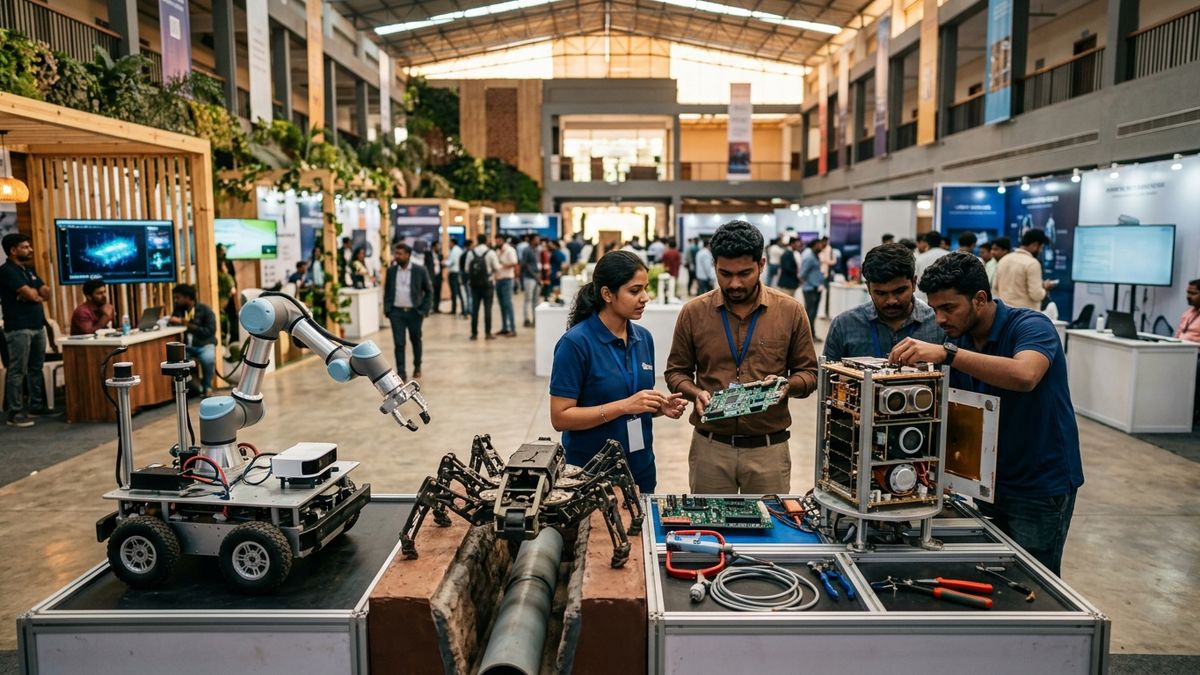
Furthermore, this breakthrough reinforces broader national semiconductor efforts, complementing advances in compound gallium nitride (GaN) power electronics and high-frequency RF chips, sovereign computing initiatives led by domestic enterprise chip startups, and industrial edge automation seen in Addverb's robotic manufacturing scale.
Commercialization Roadmap and Ecosystem Integration
With government design-linked backing secured, BigEndian is finalizing shuttle runs and test wafer validation before commencing volume tape-out with global foundry partners. The company has already entered technical preview agreements with top Indian original design manufacturers (ODMs) producing surveillance cameras for the Smart Cities Mission and Indian Railways.
In parallel, BigEndian is releasing an open-source software development kit (SDK) featuring one-click model quantization for standard PyTorch and ONNX frameworks, ensuring that domestic AI developers can deploy computer vision models onto the silicon with zero friction.
Frequently Asked Questions
What is the primary function of BigEndian's AI Vision SoC?
The chip is a specialized System-on-Chip (SoC) designed for edge artificial intelligence workloads. It integrates an image signal processor (ISP) with a proprietary neural processing unit (NPU) to run high-frame-rate object detection, facial recognition, and anomaly detection directly on camera hardware without cloud latency.
What role does the India Semiconductor Mission (ISM) DLI scheme play in this funding?
The Design Linked Incentive (DLI) scheme provides financial incentives covering up to 50% of eligible design expenditure (including EDA software tools, IP licensing, and tape-out costs) alongside deployment-linked incentives upon commercial production.
Why is the use of RISC-V open architecture significant for indigenous silicon?
RISC-V provides an open-standard instruction set architecture (ISA) that eliminates proprietary licensing fees associated with ARM or x86, safeguarding India against foreign geopolitical export restrictions and enabling custom hardware instruction extensions.
Which industries will be the initial commercial adopters of the chip?
Primary launch verticals include municipal smart surveillance networks, perimeter security cameras for defense establishments, industrial automation quality inspection, and vision modules for autonomous mobile robots.
Primary Sources & Official References
- Ministry of Electronics and Information Technology (MeitY): Design Linked Incentive (DLI) Policy Directives
- India Semiconductor Mission (ISM): Technical Advisory Board Approvals
- BigEndian Semiconductors Private Limited: Microarchitecture Whitepaper and Product Specifications
- India Electronics and Semiconductor Association (IESA): Domestic Silicon Roadmap