QNu Labs Raises ₹200 Cr for Quantum Security: Scaling Post-Quantum Cryptography Globally
By Rohan Varma | Published September 28, 2026 | 8 min read
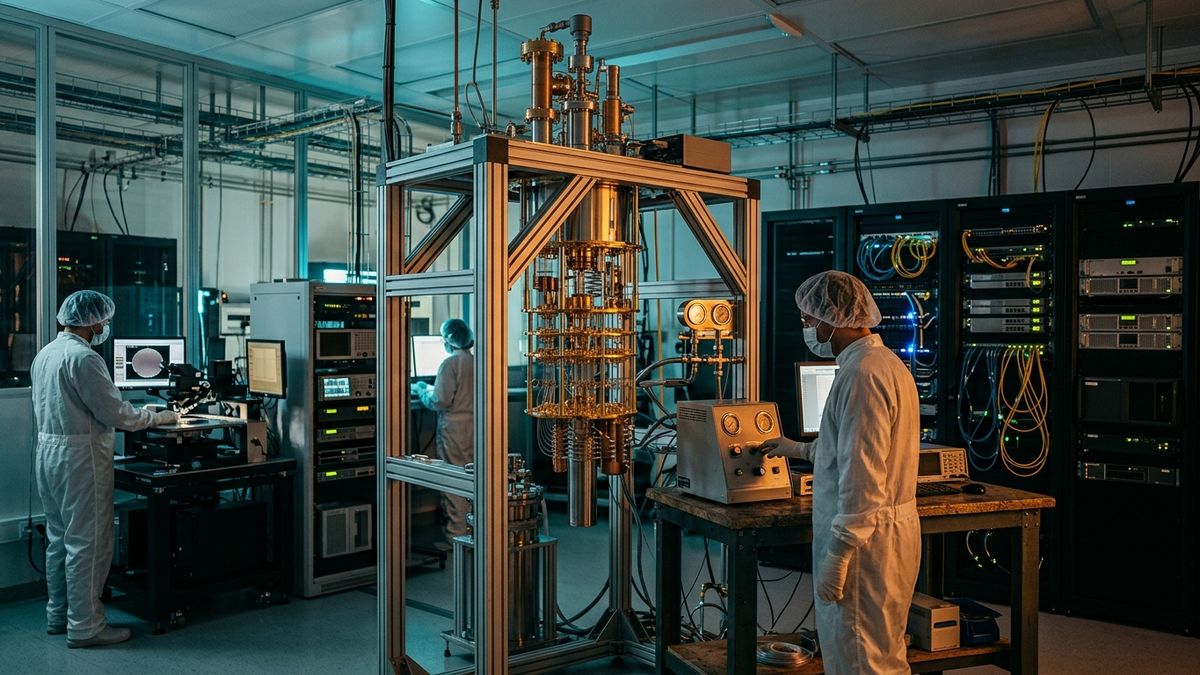
Bengaluru-based QNu Labs secures ₹200 crore to scale quantum-safe cryptography and Quantum Key Distribution (QKD) hardware across international defense and banking sectors.
Bengaluru-based quantum cybersecurity pioneer QNu Labs has raised ₹200 crore (approximately $24 million) in a milestone growth equity round to accelerate the international commercialization of its quantum-safe hardware and cryptographic software. The investment, backed by prominent domestic deeptech venture funds and strategic institutional investors, positions QNu Labs at the vanguard of the global race to secure critical national infrastructure, financial networks, and defense communications against quantum computer decryption attacks.
The capital injection marks one of the largest private investment rounds into an Indian physical-layer cybersecurity startup, signaling robust market confidence in domestic deeptech engineering emerging from sovereign academic incubators.
The Looming Threat: 'Harvest Now, Decrypt Later' and Q-Day
Modern global commerce, cloud computing, and sovereign communications rely almost universally on public-key cryptographic protocols such as RSA and Elliptic Curve Cryptography (ECC). These algorithms base their security on mathematical problems—specifically, prime integer factorization and discrete logarithms—that would take classical supercomputers thousands of years to solve.
However, the advent of fault-tolerant quantum computers running Shor's algorithm will solve these mathematical problems in minutes, rendering conventional encryption obsolete. This anticipated event, known across the intelligence community as "Q-Day," is already actively destabilizing cybersecurity paradigms.
Sophisticated state-sponsored threat actors are currently executing "Harvest Now, Decrypt Later" (HNDL) campaigns: intercepting and archiving petabytes of encrypted military communications, diplomatic cables, intellectual property, and medical records today, with the objective of decrypting them the moment scalable quantum processors become operational.
"Organizations that wait for Q-Day before modernizing their cryptographic infrastructure will find their most sensitive sovereign secrets laid bare retrospectively,"stated leadership at QNu Labs. "Securing communication backbones is not a software patch that can be deployed overnight; it requires retrofitting the physical fiber layer and migrating enterprise software architectures to mathematically proven post-quantum algorithms today."
This development aligns closely with academic-industrial initiatives such as the ₹450 crore first close of the IIT Madras Deep-Tech Fund, which explicitly prioritizes quantum physical sciences, alongside broader efforts documented in India's deep-tech funding momentum building.
QNu Labs' Dual-Shield Architecture: Hardware Physics Meets Advanced Mathematics
Unlike pure-play software vendors, QNu Labs has engineered a complementary two-tiered defense paradigm that addresses both physical transmission security and distributed software endpoints:
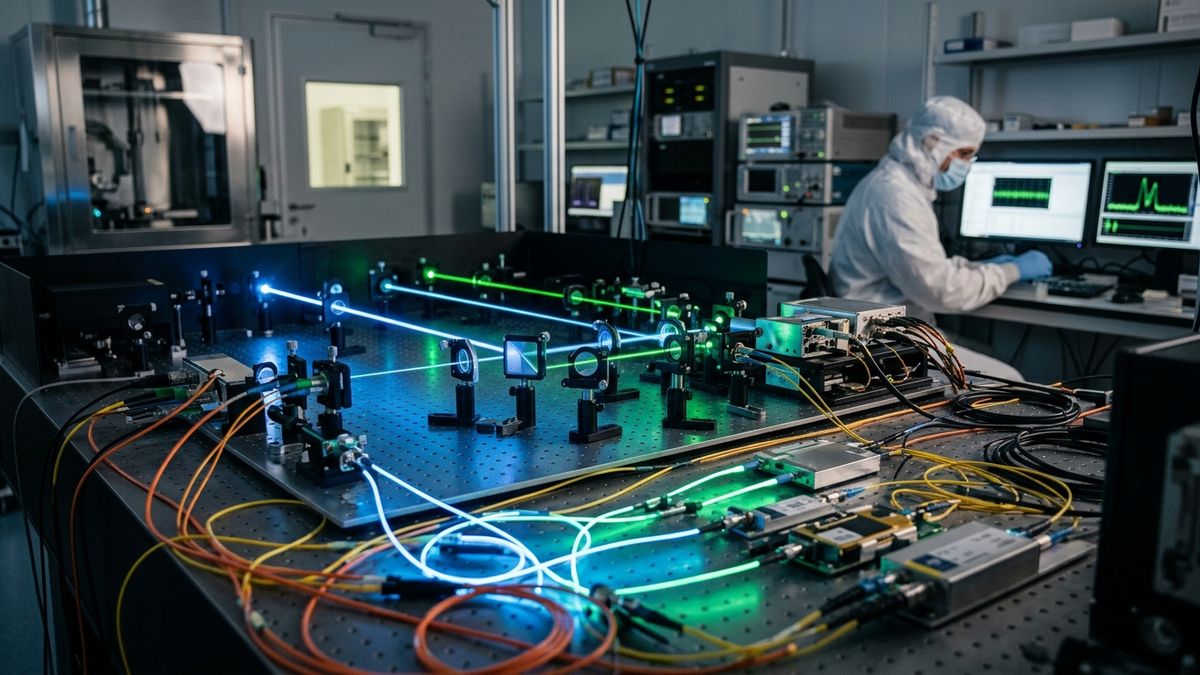
- Quantum Key Distribution (QKD - Hardware Layer): Using its flagship hardware platform, Armos, QNu Labs transmits cryptographic encryption keys encoded onto individual photons traversing optical fiber cables. Governed by the laws of quantum mechanics—specifically the Heisenberg Uncertainty Principle and the No-Cloning Theorem—any attempt by an adversary to intercept or measure the photons alters their quantum state, immediately notifying both endpoints and invalidating the compromised key.
- Quantum Random Number Generation (QRNG - Hardware Entropy): The company's Tropos appliances utilize quantum mechanical photon-splitting entropy sources to produce true, non-deterministic random numbers, eliminating the systemic vulnerabilities inherent in classical pseudo-random software generators.
- Post-Quantum Cryptography (PQC - Software Layer): Through its Hodos software suite, QNu Labs implements the newly finalized National Institute of Standards and Technology (NIST) post-quantum standards (including ML-KEM and ML-DSA), providing lattice-based mathematical encryption that can be deployed across existing legacy IT servers, mobile devices, and IoT hardware without requiring physical optical upgrades.
This comprehensive architectural capability makes QNu Labs one of only a handful of enterprises globally possessing commercialized, combat-tested hardware and software quantum defense systems.
QNu Labs Technology Matrix: Quantum Key Distribution vs Post-Quantum Cryptography
The structured engineering matrix below highlights the operational trade-offs and deployment parameters of QNu Labs' primary quantum security layers:
| Architectural Dimension | Quantum Key Distribution (QKD - Armos) | Post-Quantum Cryptography (PQC - Hodos) | Quantum Random Number Generation (QRNG - Tropos) |
|---|---|---|---|
| Security Principle | Laws of Quantum Physics (Photon No-Cloning) | Mathematical Complexity (Lattice-Based Problems) | Quantum Superposition & Vacuum State Fluctuations |
| Vulnerability to Q-Day | Mathematically & Physically Impervious | Resistant based on current mathematical proof | Produces infinite, truly unpredictable entropy |
| Deployment Medium | Dedicated Dark Fiber / Free-Space Laser Links | Standard TCP/IP, Cloud, & Legacy Endpoints | PCIe Card / Server Appliance Integration |
| Key Generation Rate | Up to 10 kbps – 100 kbps over 100 km spans | Instantaneous algorithmic key negotiation | Up to 1 Gbps continuous hardware entropy |
| Primary Use Cases | Inter-datacenter links, military command, core banking | Remote user VPNs, web sessions, microservice APIs | HSM seeding, cryptographic key generation, simulations |
| Regulatory Alignment | ITU-T Y.3800, ETSI QKD ISG, India DoT QKD Specs | NIST FIPS 203 (ML-KEM), FIPS 204 (ML-DSA) | Common Criteria EAL4+, NIST SP 800-90B/C |
National Defense Backing and Global Expansion Strategy
QNu Labs' breakthrough was accelerated through institutional support from India's Ministry of Defence via the Innovations for Defence Excellence (iDEX) initiative and the Department of Science and Technology's National Quantum Mission (NQM).
The company successfully demonstrated quantum key distribution over extended operational distances for the Indian Army and the Indian Navy, proving the resilience of its optoelectronic systems in rugged field environments. This sovereign validation mirrors defense momentum discussed in India's AI ecosystem eyeing indigenous defense capabilities.
With ₹200 crore in fresh capital, QNu Labs is aggressively scaling its global sales footprint across North America, the European Union, and the GCC region. These jurisdictions have issued strict regulatory timelines—such as the US Commercial National Security Algorithm (CNSA) 2.0 suite and European cybersecurity directives—mandating that banks, energy grids, and government bodies transition to quantum-resistant encryption by 2027–2030.
By combining world-class optoelectronic hardware manufacturing with cutting-edge cryptographic software, QNu Labs is demonstrating that Indian deeptech ventures can lead international standards in high-stakes technological domains.
Frequently Asked Questions
What is QNu Labs and what technology does it develop?
QNu Labs is a Bengaluru-based deeptech cybersecurity enterprise incubated out of the IIT Madras research ecosystem. It develops hardware and software solutions that protect digital data from decryption attacks powered by quantum computers, utilizing Quantum Key Distribution (QKD) and Post-Quantum Cryptography (PQC).
How much capital did QNu Labs raise in its latest round?
QNu Labs secured ₹200 crore (approximately $24 million) in institutional growth financing to expand its manufacturing infrastructure, secure international certifications, and scale sales operations across North America, Europe, and the Middle East.
What is the 'Q-Day' threat that QNu Labs' products solve?
"Q-Day" refers to the future moment when fault-tolerant quantum computers become powerful enough to run Shor's algorithm, breaking standard RSA and Elliptic Curve public-key encryption. Threat actors are currently executing "Harvest Now, Decrypt Later" (HNDL) attacks by stealing encrypted government and corporate data to decrypt once quantum machines mature.
How does Quantum Key Distribution (QKD) differ from Post-Quantum Cryptography (PQC)?
QKD is a physical hardware-based security layer that transmits encryption keys encoded in single photons over fiber-optic cables or free-space lasers, where any eavesdropping attempt instantly alters the quantum state and is detected. PQC is a software-based algorithmic approach that uses complex mathematical lattices running on standard computer hardware to resist quantum decryption.
Primary Sources & Official References
- Department of Science and Technology (DST): National Quantum Mission (NQM) Technical Roadmap and R&D Allocation Directives.
- National Institute of Standards and Technology (NIST): Post-Quantum Cryptography Standards (FIPS 203, FIPS 204, FIPS 205).
- Innovations for Defence Excellence (iDEX): Quantum Key Distribution in Tactical Military Communications Deployment Briefing.
- Telecom Regulatory Authority of India (TRAI): Recommendations on Quantum Communications and Infrastructure Security.