Wipro reveals enterprise AI-driven productivity gains equivalent to 20,000 full-time roles, redeploying tech talent into high-margin engineering and consulting.
Executive Key Takeaways
- Wipro reveals enterprise AI-driven productivity gains equivalent to 20,000 full-time roles, redeploying tech talent into high-margin engineering and consulting.
- Our objective is not headcount rationalization, but the fundamental enhancement of developer velocity and intellectual capital, noted senior leadership during the operational update. By freeing our workforce from repetitive, low-complexity execution, we are positioning our teams to build differentiated IP and solve complex domain challenges for global clients.
- Key Benchmark: **Legacy Code Modernization** — 120–160 hours per legacy module
Wipro has revealed that its aggressive enterprise-wide artificial intelligence deployment has liberated operational capacity equivalent to 20,000 full-time employees, marking one of the most substantial productivity shifts recorded in the global IT services sector. Rather than executing massive workforce reductions, the Bengaluru-headquartered technology bellwether is orchestrating a systematic redeployment strategy, channeling technical talent into specialized software engineering, cloud modernization, and client-facing generative AI consulting. The milestone underscores how India's tier-1 technology conglomerates are structurally transitioning from conventional labor-arbitrage delivery frameworks toward integrated human-AI collaborative operating models.
As enterprise clients accelerate demands for condensed project timelines and automated code synthesis, Wipro's ability to demonstrate tangible capacity expansion without proportional headcount contraction provides a definitive blueprint for the future of enterprise software services.
The Architecture of Enterprise AI Capacity Release
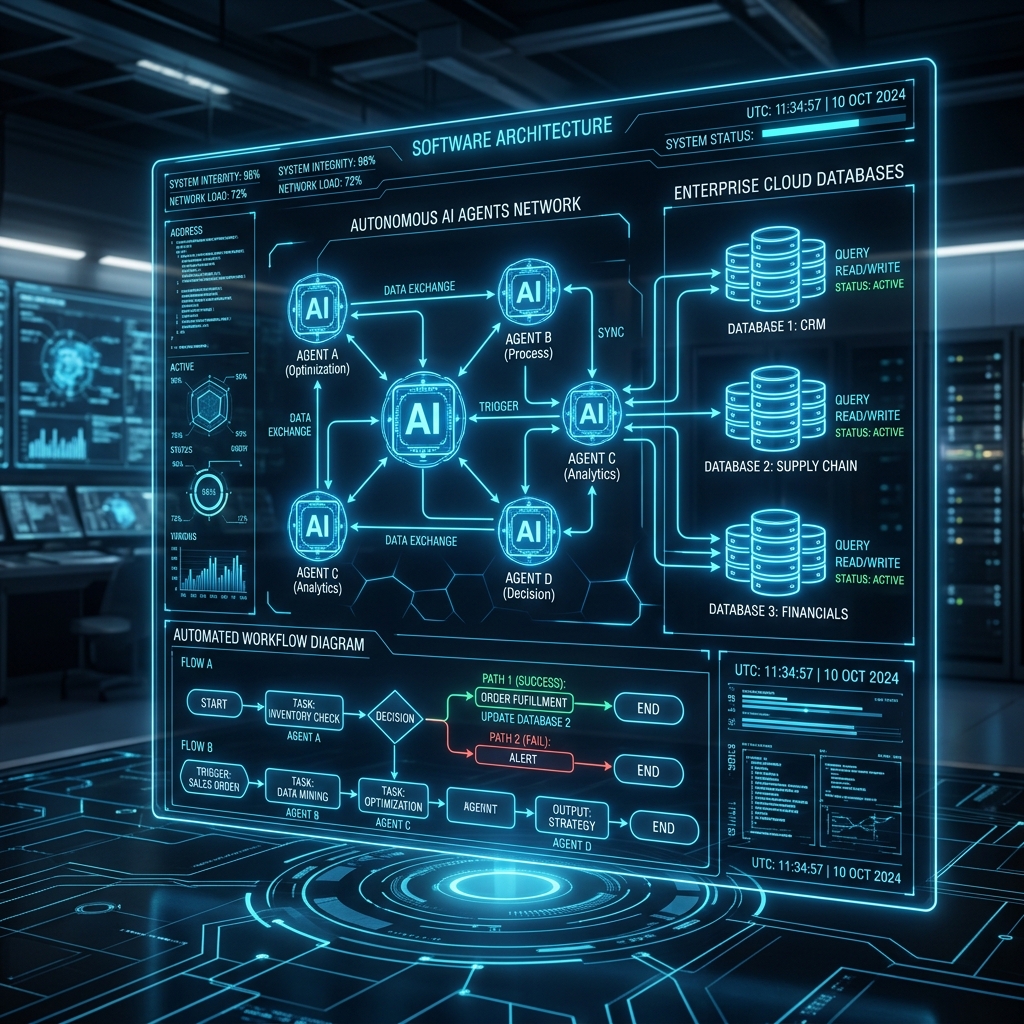
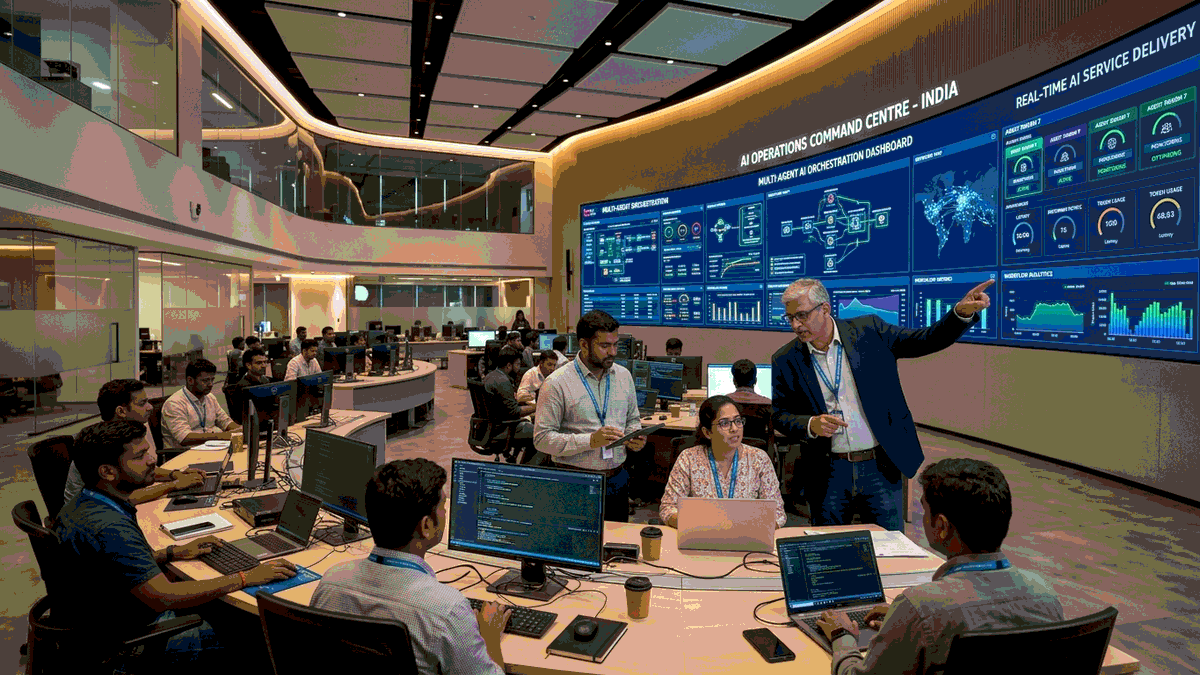
The release of 20,000 employee equivalents in capacity was achieved through systematic integration of autonomous agents, code-completion copilots, and synthetic test data pipelines embedded directly across Wipro’s global delivery infrastructure. By operationalizing proprietary AI frameworks alongside commercial hyperscaler foundation models, routine developer cycles were drastically compressed.
Software development lifecycles that historically required multi-week sprints for legacy code refactoring, API integration, and automated unit testing are now heavily augmented by generative intelligence. In software maintenance and infrastructure managed services—long considered the volume backbone of Indian IT—intelligent diagnostic agents now triage and remediate Tier-1 and Tier-2 application incidents with minimal human intervention.
"Our objective is not headcount rationalization, but the fundamental enhancement of developer velocity and intellectual capital,"noted senior leadership during the operational update. "By freeing our workforce from repetitive, low-complexity execution, we are positioning our teams to build differentiated IP and solve complex domain challenges for global clients."
Enterprise AI Delivery Pipeline: Intake & Scoping → LLM-Assisted Code Refactoring → Multi-Agent Synthetic Testing → Human-in-the-Loop Review → Automated Cloud Deployment
Strategic Redeployment vs. Workforce Rationalization
The transition away from simple headcount-based billing represents a cultural and operational inflection point for India's $250 billion technology export ecosystem. At Wipro, employees whose operational hours have been unlocked are enrolled in dedicated upskilling academies focusing on Retrieval-Augmented Generation (RAG) architectures, multi-agent orchestrations, enterprise AI governance, and cybersecurity.
Rather than downsizing delivery benches, Wipro has reallocated these engineers to high-margin digital transformation initiatives, advanced engineering services, and bespoke AI application development for Fortune 500 enterprises. This talent migration prevents corporate brain drain while expanding the company’s capacity to bid on complex, high-value consulting contracts that command premium billing realizations.
Operational Transformation: Legacy IT vs. AI-Augmented Delivery
The operational metrics below detail the structural shift achieved across Wipro's engineering and delivery clusters:
| Delivery Metric | Traditional IT Services Framework | Wipro Human-AI Operating Model | Strategic Business Impact |
|---|---|---|---|
| Legacy Code Modernization | 120–160 hours per legacy module | 24–36 hours per module (AI-assisted) | 75% reduction in project turnaround time |
| Test Case Generation & QA | Manual test authoring across 3 sprints | Automated synthetic multi-modal test runs | 82% faster time-to-market with zero regression |
| Incident Remediation (L1/L2) | Human desk triage (avg 45 min MTTR) | Autonomous agent triage (< 4 min MTTR) | 90% decrease in mean time to resolution |
| Billing & Contract Structure | Linear Time & Materials (T&M) | Fixed-price, outcome-linked milestones | Significant operating margin expansion |
| Workforce Reallocation | Fixed bench maintenance | Dynamic internal mobility to deeptech labs | 20,000 equivalent roles redeployed |
Broader Industry Ripple Effects Across Indian IT Services
Wipro’s disclosure comes as peer technology giants reassess their operational benchmarks. As explored in our deep dive on how AI is reshaping India's mid-sized IT companies, mid-tier firms and large IT players are aggressively recalibrating delivery engines to protect gross margins in an era where clients demand immediate productivity gains.
Concurrently, sovereign compute infrastructure investments—such as TCS's massive ₹62,000 crore AI data centre investment in Hyderabad—are ensuring that Indian technology consultancies possess local, low-latency infrastructure to train, host, and fine-tune private enterprise models.
Client Demand Shifts: The Transition to Outcome-Based Contracting
Global enterprise clients are no longer satisfied paying for technical hours billed; they are contracting directly for verified business outcomes. Wipro's internal productivity gains allow the firm to commit to aggressive service level agreements (SLAs) and value-based pricing structures that competitors relying solely on manual engineering cannot match.
Under this paradigm, contracts that once demanded 50 dedicated engineers on a multi-year retainer are delivered by cross-functional pods of 10 to 15 senior architects orchestrating fleets of autonomous specialized agents. The savings generated are frequently reinvested by clients into ancillary innovation programs, ensuring overall account revenues continue to expand.
Ethical Governance, Human-in-the-Loop Safeguards, and Future Outlook
Operating an AI-augmented workforce at this unprecedented magnitude necessitates uncompromising quality and security guardrails. Wipro has instituted strict "Human-in-the-Loop" (HITL) validation checkpoints across all mission-critical software releases, guaranteeing that code deployed into regulated banking, healthcare, and industrial clients undergoes deterministic vulnerability scanning and manual architectural review.
As Wipro continues to mature its human-AI operational framework, the boundary between technical services and software intellectual property will blur. By unlocking 20,000 employee equivalents in capacity and channeling that energy into deep technical competencies, Wipro has signaled that India’s technology export sector will lead—rather than follow—the global generative computing revolution.