India's operational and pipeline data-centre capacity surges past 2.1 GW as sovereign AI workloads, GPU clusters, and cloud hyperscalers reshape high-density power and cooling.
Executive Key Takeaways
- India's operational and pipeline data-centre capacity surges past 2.1 GW as sovereign AI workloads, GPU clusters, and cloud hyperscalers reshape high-density power and cooling.
- We are no longer simply building data warehouses with servers; we are engineering high-voltage thermal power plants that compute, emphasized an infrastructure lead at a leading hyperscale operator. Surpassing 2.1 GW is just the opening chapter. Deploying thousands of interconnected GPUs demands unprecedented grid coordination, dedicated substations, and closed-loop liquid cooling loops.
- Key Benchmark: **Rack Power Density** — 6 kW – 10 kW per cabinet
India’s enterprise data centre ecosystem has crossed a monumental threshold, with combined operational and active pipeline capacity officially surging past 2.1 Gigawatts (GW). Driven by an unprecedented convergence of generative AI training workloads, massive enterprise cloud migrations, and national sovereign computing mandates, the country’s high-density digital infrastructure is expanding at the fastest pace in Asia. The milestone marks a structural transition from legacy enterprise hosting toward massive hyperscale campuses engineered specifically to support energy-intensive GPU server clusters.
This exponential infrastructure buildout is catalyzing a radical re-engineering of electrical substation designs, ultra-high-density power distribution, and advanced direct-to-chip liquid cooling systems capable of sustaining continuous multi-megawatt thermal loads.
The Structural Shift: Moving from Cloud Hosting to Dense AI Supercomputing
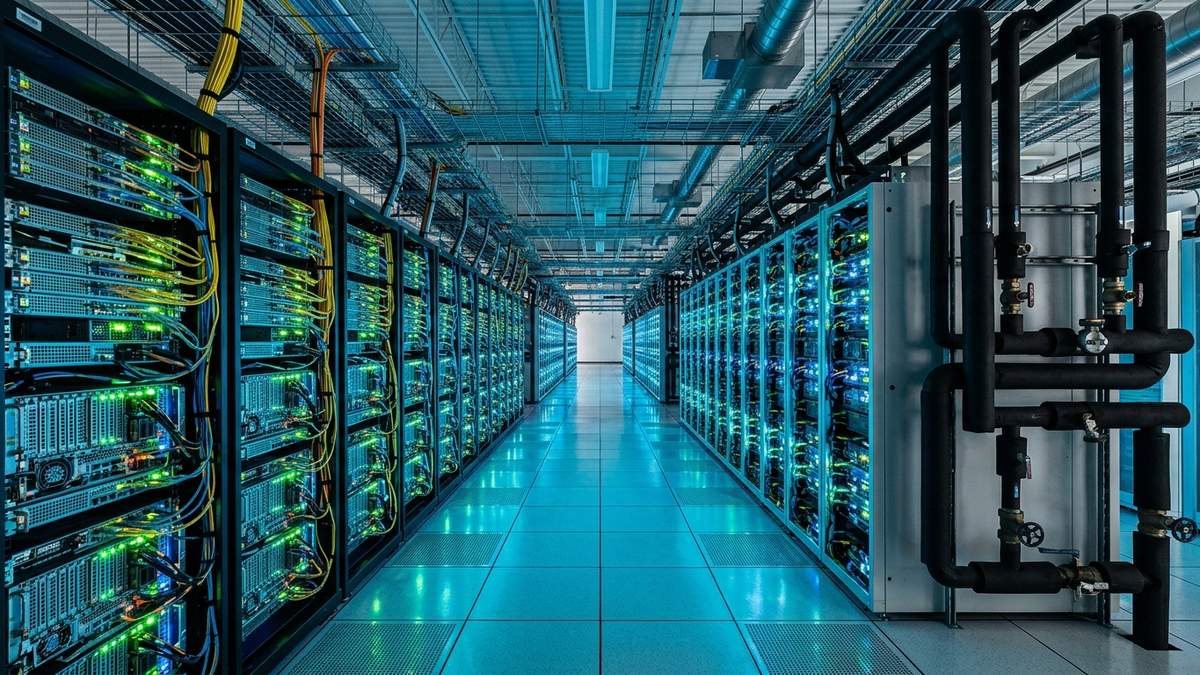
For over a decade, traditional enterprise data centers were architected around standard CPU server racks consuming between 5 kW and 10 kW of power per cabinet. These installations relied on conventional raised-floor air conditioning (CRAC/CRAH) systems that circulated cooled air throughout server halls.
The advent of modern AI accelerators—such as NVIDIA H100/H200, Blackwell B200, and custom enterprise ASIC processors—has obliterated those legacy architectural assumptions. Modern AI server racks routinely draw between 40 kW and 120 kW per cabinet. At these astronomical power densities, ambient air cooling is physically incapable of dissipating the generated heat flux, forcing data center architects to fundamentally redesign structural layouts, floor weight capacities, and fluid dynamics.
"We are no longer simply building data warehouses with servers; we are engineering high-voltage thermal power plants that compute,"emphasized an infrastructure lead at a leading hyperscale operator. "Surpassing 2.1 GW is just the opening chapter. Deploying thousands of interconnected GPUs demands unprecedented grid coordination, dedicated substations, and closed-loop liquid cooling loops."
AI Data Centre Infrastructure Stack: 220kV/400kV Grid Intake → Dedicated On-Site Substation → High-Efficiency UPS & Transformers → High-Density AI Racks (60-120 kW) → Direct-to-Chip Liquid Cooling Loops
The Thermal Engineering Frontier: Liquid Cooling and Immersion Infrastructure
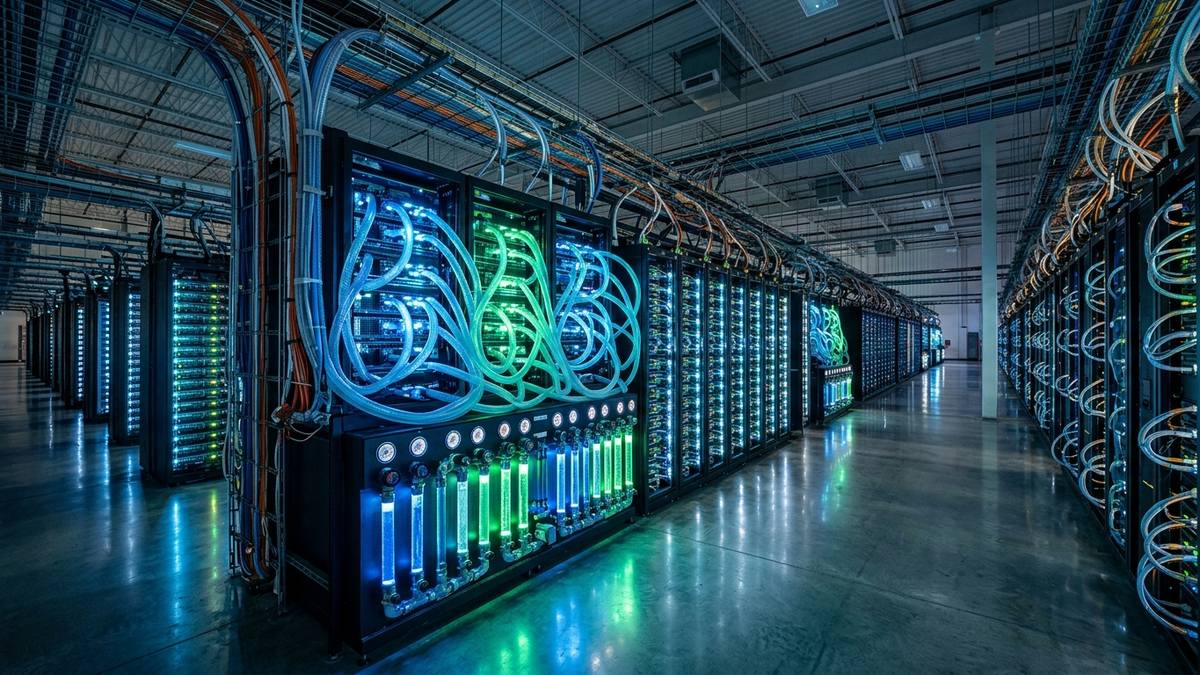
To support continuous AI training clusters without risking thermal throttling or hardware degradation, Indian data center operators are executing a widespread migration toward Direct-to-Chip (D2C) Liquid Cooling and Immersion Cooling:
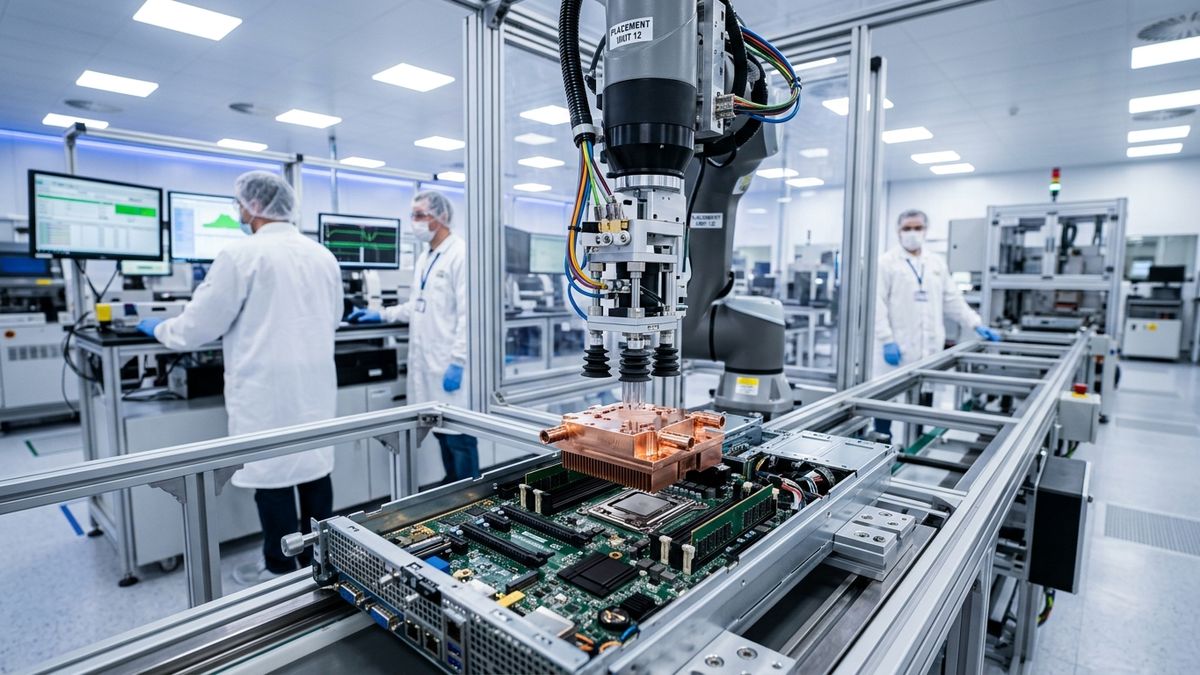
1. Direct-to-Chip Liquid Cooling: Dielectric fluid or demineralized water is circulated through micro-channel copper cold plates mounted directly onto GPU and CPU dies, capturing up to 85% of processor heat directly at the silicon interface.
2. Cooling Distribution Units (CDUs): Massive mechanical CDUs regulate fluid temperature, flow rate, and pressure across hundreds of rack cabinets simultaneously, isolating primary facility water loops from sensitive secondary IT loops.
3. Power Usage Effectiveness (PUE) Optimization: While legacy facilities operated at PUEs exceeding 1.6, new hyperscale AI facilities under construction in Navi Mumbai, Hyderabad, and Chennai are targeting annualized PUEs below 1.25, even under harsh Indian summer temperatures.
Infrastructure Evolution Matrix: Legacy Cloud vs. Sovereign AI Hyperscale
The engineering comparison below highlights the technological transformation underway across India's digital real estate sector:
| Engineering Parameter | Legacy Cloud Facility (2020–2022) | Modern AI Hyperscale Campus (2025–2026) | Engineering Significance |
|---|---|---|---|
| Rack Power Density | 6 kW – 10 kW per cabinet | 40 kW – 120 kW+ per cabinet | 10x increase in localized compute and thermal load |
| Cooling Methodology | Raised floor air cooling (CRAC/CRAH) | Direct-to-Chip (D2C) & Immersion Cooling | Fluid carries heat 3,500x more effectively than air |
| Floor Load Capacity | 1,000 – 1,200 kg/m² | 2,500 – 3,500 kg/m² | Supporting heavy liquid manifolds and dense server chassis |
| Facility PUE Standard | 1.55 – 1.70 | 1.20 – 1.30 | Massive operational savings and reduced carbon footprint |
| Grid Power Intake | 11kV – 33kV distribution feeds | Dedicated 220kV – 400kV substations | Ultra-resilient, dedicated high-voltage utility interconnects |
| Network Fabric | 100GbE standard leaf-spine | 800Gb/s InfiniBand & Ultra Ethernet | Ultra-low latency for distributed multi-node LLM training |
Regional Powerhouses and Sovereign Compute Resilience
The acceleration beyond 2.1 GW is concentrated across four dominant geographic nodes:
- Mumbai / Navi Mumbai: The undisputed digital capital of India, commanding over 50% of operational capacity due to landing stations for major international undersea fiber optic cables.
- Hyderabad: Emerged as the favored destination for massive sovereign AI investments, highlighted by TCS’s monumental ₹62,000 crore AI data centre commitment in Hyderabad.
- Chennai & Noida: Providing vital geographical redundancy and ultra-low latency access to northern and southern commercial corridors.
At the same time, regulatory authorities are closely monitoring this growth. As outlined in the RBI's warning regarding technology concentration risks in Indian banking, regulators are pushing financial institutions to diversify cloud dependencies and anchor critical core data within domestic sovereign facilities.
Power Distribution, Substation Logistics, and Captive Renewable Integration
The most formidable constraint facing the 2.1 GW+ boom is not hardware procurement, but electrical grid access. Securing 100 MW to 300 MW of uninterrupted power for a single campus requires long-term planning with state distribution companies (DISCOMs) and substantial investments in dedicated on-site gas-insulated substations (GIS).
To fulfill stringent corporate sustainability targets, data center developers are signing long-term power purchase agreements (PPAs) with solar and wind renewable developers, complemented by battery energy storage systems (BESS) and backup generator infrastructure capable of instantaneous cutover during grid fluctuations.
Long-Term Outlook: India as the Global Southern Compute Hub
With 2.1 GW already breached and projects under construction poised to push total capacity past 4 GW before 2030, India is cementing its stature as the definitive computational powerhouse for the Global South.
Competitive land availability, expanding clean energy corridors, an abundance of elite systems engineers, and a massive domestic digital consumption base ensure that India will not only train its own sovereign foundation models, but export high-performance cloud compute to enterprises worldwide.