Agrani Labs in Talks to Raise ₹800–850 Cr to Build Sovereign AI GPUs and Full-Stack Software Platform
By Elena Rostova | Published October 3, 2026 | 8 min read
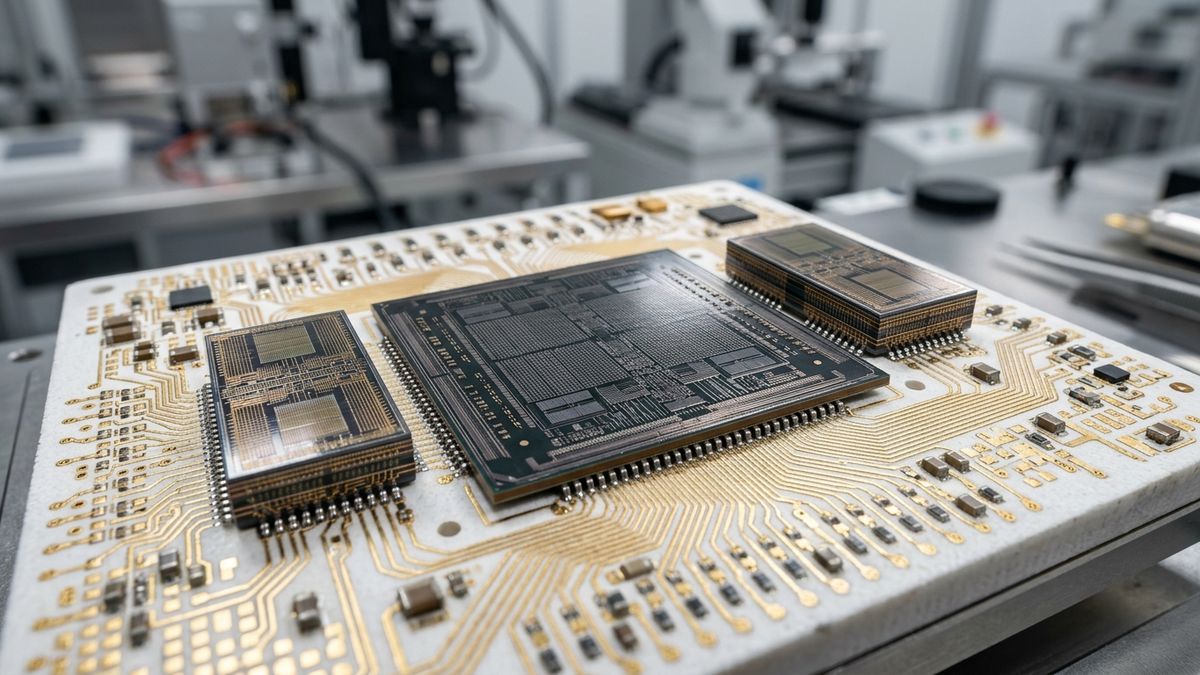
Bengaluru semiconductor startup Agrani Labs is in talks to raise Rs 800-850 crore from Samsung, 360 ONE, and Peak XV alongside Rs 120-130 crore in government RDI support.
Bengaluru-based semiconductor startup Agrani Labs is in advanced discussions to raise between Rs 800 crore and Rs 850 crore ($95 million to $100 million) in a marquee growth-stage funding round, according to institutional sources familiar with the matter. The proposed financing round is expected to see capital commitments from South Korean technology giant Samsung, 360 ONE Asset Management, and existing investor Peak XV Partners, valuing the domestic chip venture at approximately Rs 2,400 crore to Rs 2,500 crore on a post-money basis.
In parallel with the private equity infusion, Agrani Labs is actively preparing an application to secure an additional Rs 120 crore to Rs 130 crore in non-dilutive co-funding under the government's flagship Research, Development, and Innovation (RDI) scheme. If consummated, the combined capital pool will represent one of the single largest private-public capital commitments directed toward an indigenous fabless AI chipmaker in Indian history.
The Strategic Urgency of Sovereign AI Silicon
The aggressive fundraising push comes amid intense global demand and acute supply bottlenecks for high-end artificial intelligence accelerators. Hyperscalers, cloud providers, and foundation model creators worldwide remain overwhelmingly dependent on NVIDIA's Hopper and Blackwell GPU platforms, which command premium pricing, face extended delivery lead times, and are constrained by TSMC's CoWoS (Chip-on-Wafer-on-Substrate) advanced packaging capacity.
For India, this dependence carries profound economic and strategic risks. As highlighted in recent reports regarding the IndiaAI Mission facing a 15,000-GPU deficit as the government issues fresh procurement tenders, public subsidization of compute is heavily constrained by the availability and astronomical dollar costs of foreign hardware. By engineering native silicon architectures from the transistor layer upwards, Agrani Labs seeks to establish a sovereign compute tier insulated from external supply disruptions.
Agrani's architectural roadmap targets two fundamental computational challenges:
- Dedicated Matrix-Math Acceleration: Custom tensor core engines optimized for low-precision mixed formats (FP8, FP4, and INT4), maximizing throughput for transformer model inference and pre-training workloads.
- Ultra-High Memory Bandwidth Subsystems: Integrating multi-stack High Bandwidth Memory (HBM) with low-latency inter-die interconnects to mitigate the memory wall that throttles generative AI serving.
- Full-Stack Compiler and Runtime Independence: Developing a unified software runtime and intermediate representation layer capable of compiling PyTorch and JAX models directly to Agrani hardware, bypassing NVIDIA's proprietary CUDA ecosystem lock-in.
"A sovereign AI ecosystem cannot rest indefinitely on imported silicon boards,"noted semiconductor analysts. "Without domestic intellectual property in high-performance compute silicon and compiler runtimes, an economy remains vulnerable to overseas allocation quotas, export licensing restrictions, and currency depreciation."
Financing Architecture: Private Equity and Public RDI Grants
The prospective funding structure blends global strategic investment, institutional wealth managers, and state technology development grants:
| Capital Dimension | Allocated Range | Strategic Participant / Mechanism | Primary Mandate |
|---|---|---|---|
| Private Equity Tranche | Rs 800 – Rs 850 Cr | Samsung, 360 ONE, Peak XV Partners | Core R&D, silicon engineering, tape-out capex |
| Public RDI Grant Support | Rs 120 – Rs 130 Cr | MeitY Research & Innovation Scheme | Prototype testing, academic bench, DLI compliance |
| Target Post-Money Valuation | Rs 2,400 – Rs 2,500 Cr | Consolidated Valuation Benchmark | Tier-1 sovereign deeptech semiconductor status |
| Historical Seed Capital | $8.0 Million (~Rs 67 Cr) | Peak XV Partners (Stealth Exit) | Architectural validation and simulation testbeds |
| Silicon Target Node | Advanced FinFET / GAA | Global Commercial Foundry (TSMC/Samsung) | Production-ready AI GPU tape-out by 2027 |
Complementing India's Broader Semiconductor Ecosystem
Agrani's expansion aligns with the massive industrial expansion of domestic electronics infrastructure, headlined by Tata Electronics building India's semiconductor manufacturing ecosystem and national initiatives promoting fabless chip innovation. Under the India Semiconductor Mission (ISM), policymakers have placed deliberate emphasis on Design-Linked Incentives (DLI) to nurture indigenous product design alongside physical silicon foundries.
Earlier this year, Agrani Labs emerged from stealth mode backed by an $8 million seed round led by Peak XV Partners, assembling a world-class team of veteran micro-architects, compiler engineers, and verification specialists from global semiconductor giants. With Rs 800–850 crore in growth equity and government RDI backing, Agrani plans to double its engineering headcount in Bengaluru, accelerate its first full-mask silicon tape-out, and deploy pilot GPU clusters across domestic data centres and research universities.
As the race for artificial general intelligence accelerates, Agrani Labs' multi-hundred-crore capitalization reflects an unambiguous institutional consensus: India must not only train sovereign foundation models, but also manufacture the silicon engines that compute them.
Frequently Asked Questions
What is Agrani Labs and what technology is it building?
Agrani Labs is a Bengaluru-based fabless semiconductor venture founded to design high-performance graphics processing units (GPUs) and specialized AI accelerators tailored for large language model (LLM) training and inference, alongside a proprietary software stack designed as an alternative to NVIDIA's CUDA.
Who are the primary investors participating in the reported Rs 800–850 crore funding round?
The financing round involves participation from South Korean electronics titan Samsung, 360 ONE Asset Management, and existing early backer Peak XV Partners, which previously led Agrani's $8 million seed round.
What is the government Research, Development and Innovation (RDI) scheme?
The RDI scheme is a national funding framework launched by the Government of India to provide non-dilutive and matching financial support for frontier deeptech research, semiconductor chip tape-outs, and domestic technological capability building.
Why is developing an indigenous GPU critical for India's AI ecosystem?
Currently, Indian AI companies and public research institutes rely almost exclusively on imported GPUs from overseas suppliers like NVIDIA. Developing indigenous silicon reduces vulnerability to global supply crunches, mitigates geopolitical export controls, and cuts the prohibitive foreign exchange costs of procuring enterprise compute.
Primary Sources & Official References
- Ministry of Electronics and Information Technology (MeitY): Semiconductor Design Linked Incentive (DLI) Directorate.
- Peak XV Partners: Frontier DeepTech and Semiconductor Investment Portfolio Briefing.
- India Semiconductor Mission (ISM): High-Performance Computing and Advanced Silicon Strategy.
- Agrani Labs: Corporate Intellectual Property and Hardware Architecture Registry.