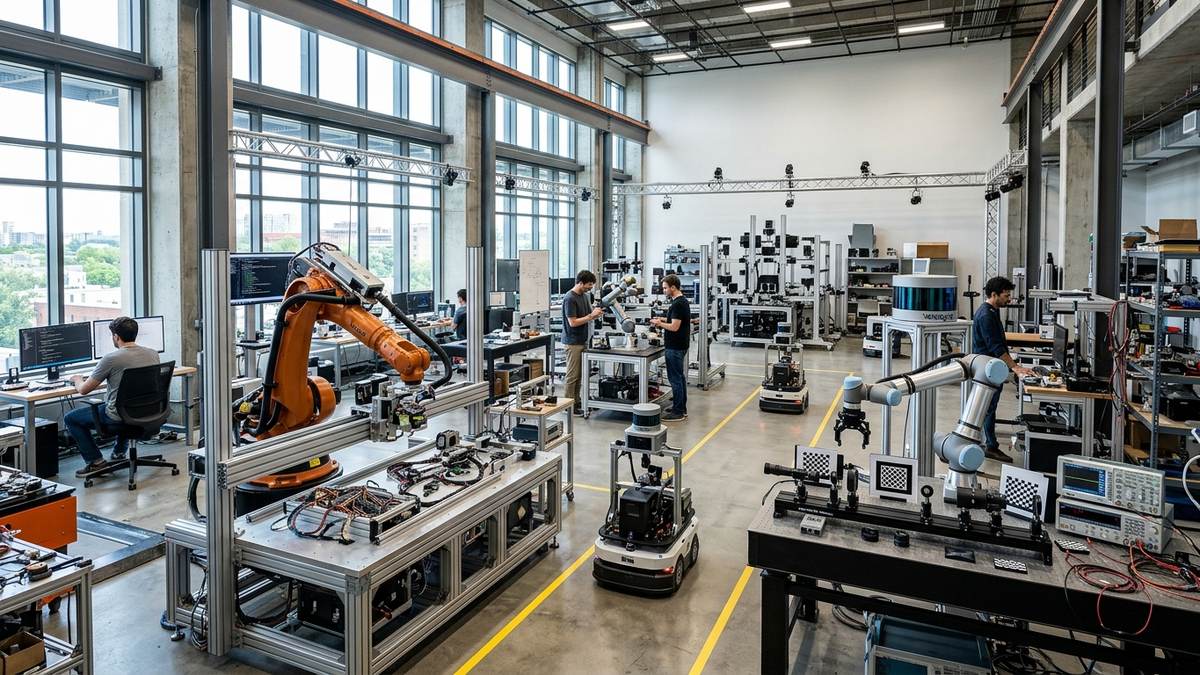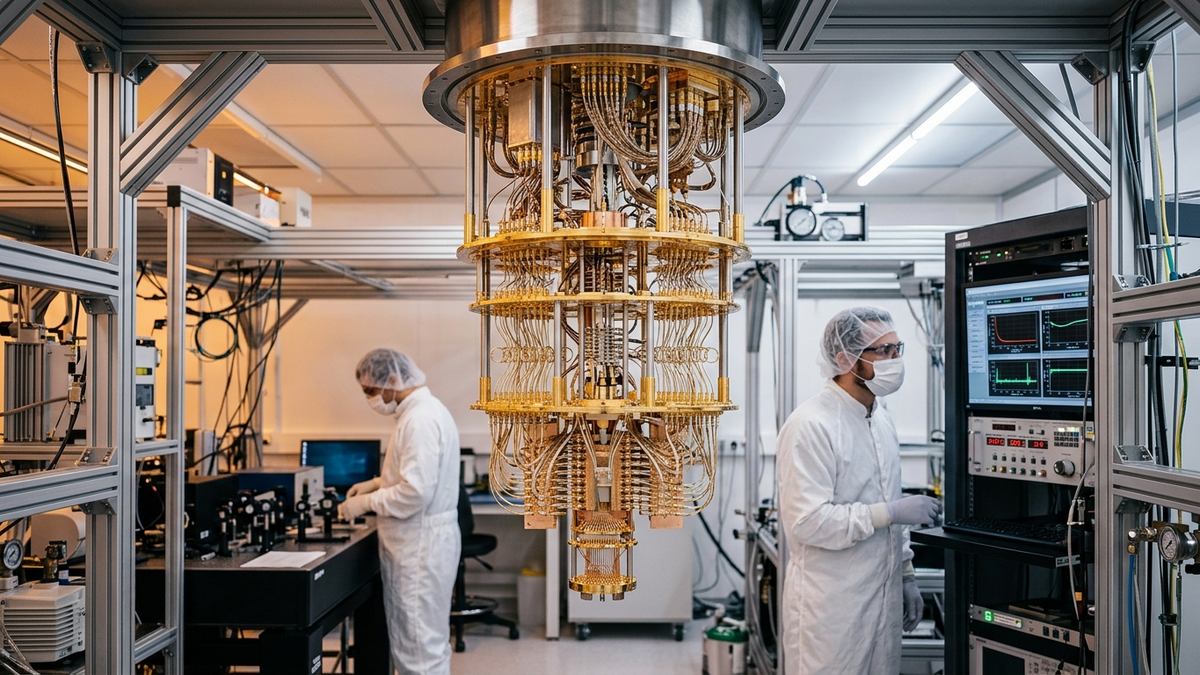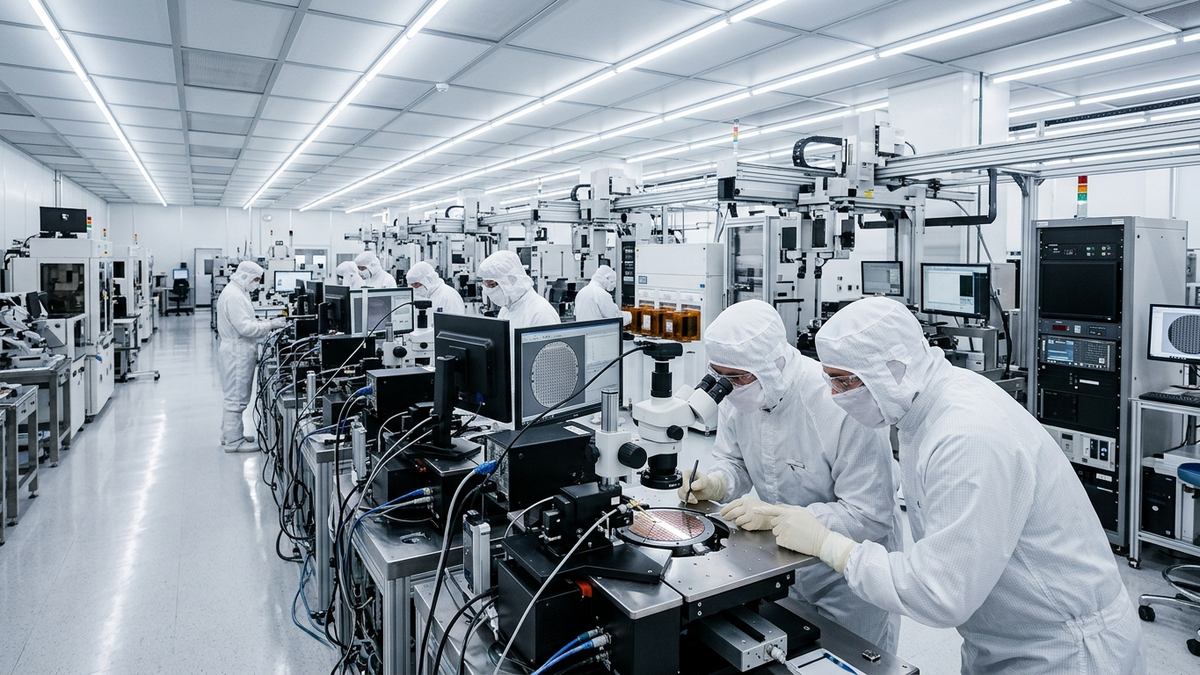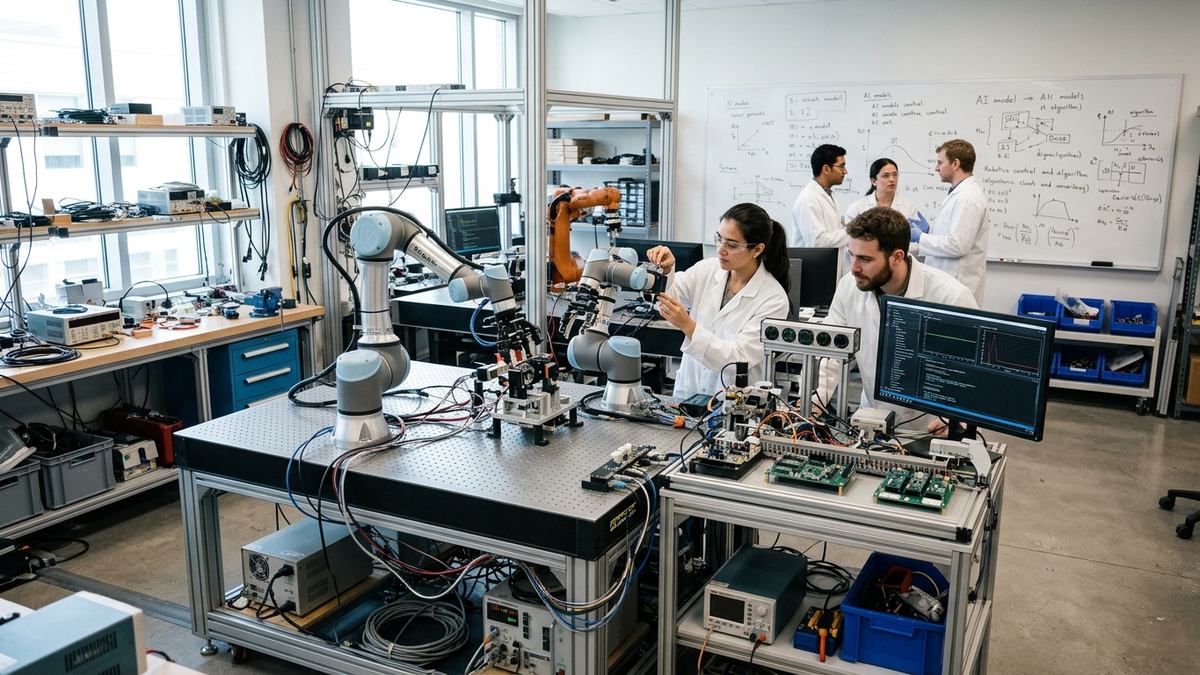
Industrial AI pioneer Avathon has partnered with IIT Roorkee to establish the Avathon Physical AI Lab (Avathon PAL), advancing autonomous systems for heavy industry.
Executive Key Takeaways
- Avathon and IIT Roorkee's Department of Computer Science & Engineering have launched the Avathon Physical AI Lab (Avathon PAL) to pioneer autonomy for heavy industry.
- Led by Principal Investigator Prof. Sugata Gangopadhyay, the lab explores mathematical optimization, multi-agent physics, and error-bounded cyber-physical control loops.
- The multi-year initiative includes sponsored Ph.D. fellowships, connecting academic foundational algorithms with Avathon's commercial AI Center of Excellence in Bengaluru.
Global industrial artificial intelligence and operations autonomy leader Avathon has forged a strategic multi-year academic partnership with the Indian Institute of Technology Roorkee (IIT Roorkee) to establish the Avathon Physical AI Lab (Avathon PAL). Situated within IIT Roorkee's prestigious Department of Computer Science & Engineering, the joint research laboratory is dedicated to pioneering foundational advances in "Physical AI"—the critical scientific domain governing autonomous decision-making, kinetic control, and predictive resilience across complex industrial infrastructure.
Headed by Principal Investigator Prof. Sugata Gangopadhyay, the initiative unites IIT Roorkee's deep academic expertise in discrete mathematics, cryptography, and systems optimization with Avathon's global commercial track record in deploying mission-critical AI for heavy industry, utilities, aviation, and supply chain enterprises.
Bridging Foundation Algorithms with Physical Kinetics in Heavy Industry
While digital artificial intelligence has achieved exponential breakthroughs in text generation, creative imagery, and coding assistants, transferring neural models to physical industrial environments poses vastly higher technical risks. In a heavy manufacturing plant, an electric utility grid, or an autonomous cargo terminal, algorithmic errors do not result in harmless typos—they can cause physical asset destruction, catastrophic downtime, or loss of life.
The Avathon Physical AI Lab addresses these rigorous demands by focusing on the deep mathematical and computational architecture required to operate physical machinery safely:
- Mathematical Optimization Under Uncertainty: Developing dynamic routing and operational scheduling algorithms that guarantee mathematically proven convergence even amidst sudden sensor failures or extreme weather conditions.
- Knowledge-Driven Multi-Agent Systems: Creating distributed software agents capable of collaborating across factory floors, sharing real-time telemetry, and negotiating task execution without single points of failure.
- Physics-Informed Neural Networks (PINNs): Embedding the immutable laws of thermodynamics, fluid dynamics, and material stress fatigue directly into machine learning loss functions to ensure synthetic decisions respect physical boundaries.
"True physical autonomy cannot rely on empirical trial-and-error approximations,"stated academic leadership at IIT Roorkee. "Industrial systems demand verifiable mathematical correctness, bounded error tolerances, and algorithmic explainability. The Avathon Physical AI Lab is designed to develop the computational 'brain' that allows heavy machines to navigate unpredictable physical realities with absolute reliability."
This landmark academic-industrial collaboration complements the quantum and deeptech research ecosystems highlighted in /post/samsung-semiconductor-and-iisc-establish-quantum-research-lab and spatial world models explored in /post/skyfall-ai-unveils-sky-001-engineering-model.
Research Mandates: Mathematical Optimization, Multi-Agent Systems, and Deterministic Control
The research agenda at Avathon PAL is structured around four high-impact foundational vectors:
1. Provable Safety Envelopes in Industrial Control
Autonomous robotics operating alongside human technicians requires formal verification. The lab is engineering control barriers that mathematically constrain neural policy models within certified safety zones, eliminating dangerous torque overshoots or trajectory deviations.
2. Large-Scale Kinetic Fleet Coordination
For industrial operations—such as multi-crane container yards or automated warehouse automated guided vehicles (AGVs)—the lab is designing decentralized combinatorial algorithms capable of coordinating hundreds of autonomous kinetic units simultaneously with zero collisions.
The comparative matrix below outlines the technological leap from conventional industrial automation to the Physical AI paradigms developed at Avathon PAL:
| Operational Dimension | Traditional Industrial Automation (PLC & SCADA) | Standard Machine Learning Models | Avathon PAL Physical AI Architecture |
|---|---|---|---|
| Operational Logic | Rigid, rule-based deterministic ladders | Probabilistic data pattern matching | Hybrid Physics-Guided Neural Optimization |
| Adaptability to Noise | Zero tolerance; requires manual reset | Prone to distribution shifts and hallucination | Online continuous learning with safety bounds |
| Multi-Agent Coordination | Centralized master-slave synchronization | Uncoordinated individual agent goals | Decentralized game-theoretic consensus protocols |
| Failure Mode Handling | Complete shutdown / fail-safe freeze | Unpredictable failure outputs | Graceful degradation with formal proof of bounds |
| Primary Industrial Target | Assembly line repetitive tasks | Offline predictive maintenance alerts | Full-spectrum kinetic operations autonomy |
Academic-Industrial Symbiosis: Sponsored Fellowships and Bengaluru CoE Integration
A cornerstone of the partnership is long-term talent cultivation and deep theoretical inquiry. Rather than quick, superficial software hackathons, the agreement establishes:
- Sponsored Ph.D. Fellowships: Fully funded doctoral research positions dedicated to multi-year dissertations in physical cybernetics and optimization.
- Post-Doctoral & Research Fellow Residencies: Competitive positions attracting elite national and international scholars to IIT Roorkee's campus.
- Direct Integration with Avathon Bengaluru CoE: The lab works in tight synchrony with Avathon's enterprise AI Center of Excellence in Bengaluru, stress-testing academic algorithmic breakthroughs against petabyte-scale telemetry from operating power plants, railways, and aerospace fleets.
The growing institutional alignment between academic institutions and high-growth AI deployment reflects trends detailed in /post/shamrock-ai-raises-5-million.
Solving the Real-World Deployment Barrier: Safety Bounds and Convergence Proofs
By grounding theoretical mathematics in real-world industrial machinery, the Avathon-IIT Roorkee partnership establishes a premier global hub for Physical AI in India. As heavy industries accelerate their modernization to meet sovereign sustainability and productivity mandates, the Avathon Physical AI Lab is primed to supply both the groundbreaking algorithmic architectures and the elite engineering minds that will power the next era of industrial autonomy.
Frequently Asked Questions
What is the primary mission of the Avathon Physical AI Lab (Avathon PAL) at IIT Roorkee?
The Avathon PAL is dedicated to advancing the computational foundation of Physical AI. Rather than focusing solely on commercial software wrappers, the lab conducts rigorous mathematical and algorithmic research to enable machines, heavy robotics, and industrial energy systems to perceive, learn, and act autonomously in unpredictable real-world environments.
Who is spearheading the academic research at the lab?
The lab is established within IIT Roorkee's Department of Computer Science & Engineering under the leadership of Principal Investigator Prof. Sugata Gangopadhyay, working alongside faculty researchers, post-doctoral fellows, and sponsored Ph.D. scholars.
How does Avathon's corporate footprint integrate with the academic lab?
Avathon PAL operates in close technical synergy with Avathon's commercial AI Center of Excellence located in Bengaluru, providing a direct pipeline to test academic algorithms against real-world industrial data from aviation, power utilities, and global supply chains.
What core research disciplines will the lab focus on?
The core research pillars include discrete mathematical optimization, reinforcement learning with formal safety bounds, knowledge representation graphs, and multi-agent distributed control for cyber-physical systems.
Primary Sources & Official References
- IIT Roorkee Department of Computer Science & Engineering: Physical AI Research Laboratory Charter
- Avathon Corporate Research Communications: Global Physical AI Academic Alliances
- Ministry of Heavy Industries: National Strategy for Autonomous Cyber-Physical Systems
- IEEE Transactions on Industrial Informatics: Deterministic Optimization in Autonomous Multi-Agent Robotics