Bengaluru Space-Tech Venture Develops In-Orbit 'Power Bank' to Extend Satellite Lifespan and Curb Space Debris
By Aarav Sharma | Published August 8, 2026 | 6 min read

A Bengaluru-based space-tech startup introduces an innovative in-orbit satellite power bank designed to recharge aging spacecraft and reduce space debris in Earth orbit.
A pioneering Bengaluru-based space-tech startup has unveiled a revolutionary in-orbit power bank technology designed to wirelessly recharge and supply auxiliary energy to operational satellites in Low Earth Orbit (LEO) and Geostationary Earth Orbit (GEO). By enabling orbiting spacecraft to replenish depleted power systems without requiring complete hardware replacements, this breakthrough promises to dramatically extend active satellite lifespans while mitigating the growing threat of dangerous orbital space debris.
The innovation addresses a multi-billion-dollar inefficiency in commercial satellite operations, where functioning communication and Earth-observation satellites are routinely decommissioned or abandoned due to depleted onboard propulsion or degraded solar cell arrays. By offering modular, autonomous energy replenishment in space, the startup's platform opens a new frontier in sustainable orbital infrastructure.
Tackling Critical Challenges in Orbital Sustainability
Modern satellite constellations require immense capital expenditure, with launch and hardware costs running into hundreds of millions of dollars. When a satellite's primary battery banks fail or its solar arrays degrade due to cosmic radiation, satellite operators are forced to write off fully operational optical payloads and telemetry units.
The startup's Orbital Power Docking (OPD) concept resolves this challenge through three core mechanisms:
1. Life Extension: Providing continuous auxiliary power to mission-critical satellites, extending operating lifespans by 3 to 7 years.
2. Debris Prevention: Preventing dead, unpowered satellites from becoming unguided space junk that threatens active orbital corridors.
3. In-Orbit Servicing Market: Establishing standardized inductive energy transfer protocols that enable satellite refueling, energy sharing, and autonomous orbital maintenance.
"Space sustainability can no longer be an afterthought. By creating a standardized, space-grade energy transfer network, we are transforming satellites from single-use consumable assets into long-term infrastructure capable of being serviced and recharged in orbit."
"— Chief Technology Officer, Orbital Infrastructure Lab"
India's commercial space sector is undergoing unprecedented acceleration following historic policy deregulation. To explore related private-sector space developments, read our comprehensive coverage on India's private space industry securing record venture investments, space policy reforms accelerating private satellite manufacturing, and incubators scaling spacetech startups across South Asia.
Orbital Power Bank vs. Conventional Satellite Architecture
The table below contrasts traditional satellite lifecycle economics with the next-generation in-orbit servicing framework enabled by the new power bank technology:
| Operational Dimension | Legacy Satellite Lifecycle | In-Orbit Power Bank Architecture | Economic & Operational Benefit |
|---|---|---|---|
| Active Operational Lifespan | 5 – 7 Years (Limited by power/fuel) | 12 – 15 Years (Via orbital topping) | 100%+ increase in mission revenue duration |
| End-of-Life Status | Uncontrolled decay / Space debris | Controlled power boost to graveyard orbit | Significant reduction in collision hazards |
| Energy Transfer Modality | None (Static solar arrays) | Wireless High-Frequency Inductive & Laser Docking | Seamless power transfer without physical wear |
| Replacement Frequency | Full payload replacement required | Modular battery dock replacement only | Capital expenditure reduced by up to 60% |
| Autonomous Docking System | Manual ground station control | AI-assisted LIDAR proximity docking | Precision alignment within ±2 millimeters |
Autonomous Proximity Operations and Energy Transfer Engineering
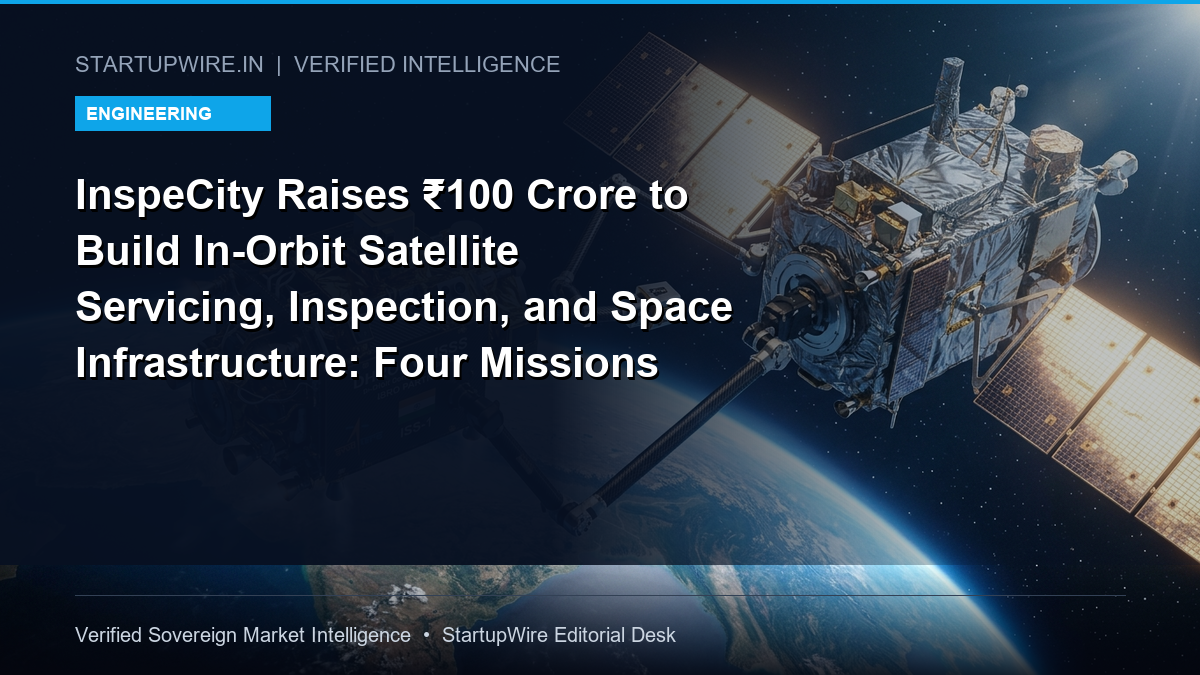
The in-orbit power bank satellite is equipped with cold-gas micro-thrusters and autonomous optical guidance algorithms that allow it to safely rendezvous with target satellites. Utilizing precise optical LIDAR alignment and phased-array inductive coupling, the power module transfers high-voltage electrical energy across a zero-contact gap with greater than 92% efficiency.
This zero-touch power transmission eliminates mechanical docking stress, ensuring fragile satellite appendages such as solar wings and parabolic antennas remain undamaged during servicing operations.
Global Market Impact & Position in India's Space Ecosystem
This pioneering technology firmly positions India's private space-tech ecosystem as an international pioneer in orbital sustainability, complementing the Indian Space Research Organisation's (ISRO) ongoing space situational awareness (SSA) initiatives like Project NETRA.
With commercial demonstration missions scheduled for early 2027, the startup has already signed preliminary memoranda of understanding with international satellite operators across North America and Europe, paving the way for commercialized space maintenance services.