Global engineering R&D spending is projected to reach $2.5 trillion by 2030, creating a massive $170 billion opportunity for Indian tech firms and GCCs.
Executive Key Takeaways
- Global engineering research and development (ER&D) expenditure is projected to scale to $2.5 trillion by 2030, with India capturing an outsized share of outsourced innovation.
- India's ER&D export revenue is forecasted to expand from approximately $45 billion to between $130 billion and $170 billion by 2030, driven by automotive, aerospace, and silicon engineering.
- Over 1,600 Global Capability Centers (GCCs) in India are transitioning from low-cost support hubs into primary ownership centers for software-defined vehicles, medical devices, and clean energy platforms.
Worldwide expenditure on Engineering Research and Development (ER&D) is projected to reach $2.5 trillion by 2030, unlocking an unprecedented multi-billion-dollar economic horizon for Indian technology firms and Global Capability Centers (GCCs). Propelled by the rapid convergence of software and physical hardware, software-defined electric vehicles (SDVs), commercial aerospace innovation, custom semiconductor tape-outs, and medtech engineering, India is solidifying its stature as the world's premier digital engineering nerve center.
According to comprehensive industry analyses by NASSCOM, Zinnov, and global management consultancies, India's addressable ER&D export revenue is forecasted to surge from its current base of approximately $45 billion to between $130 billion and $170 billion by 2030. This compound annual growth rate of 14% to 17% substantially outpaces traditional IT services, marking ER&D as the defining growth frontier of India's technology ecosystem over the next decade.
Structural Drivers: The Software-Defined Physical World
The fundamental catalyst propelling the ER&D explosion is the radical digitization of physical machinery. Historically, mechanical hardware and software engineering operated as disconnected silos. Today, products across automotive, industrial equipment, telecommunications, and aerospace are defined by software architectures:
- Software-Defined Vehicles (SDVs): Over 40% of the total cost of a modern electric vehicle now lies in electronics, battery management systems (BMS), autonomous driving sensor fusion, and digital cockpits.
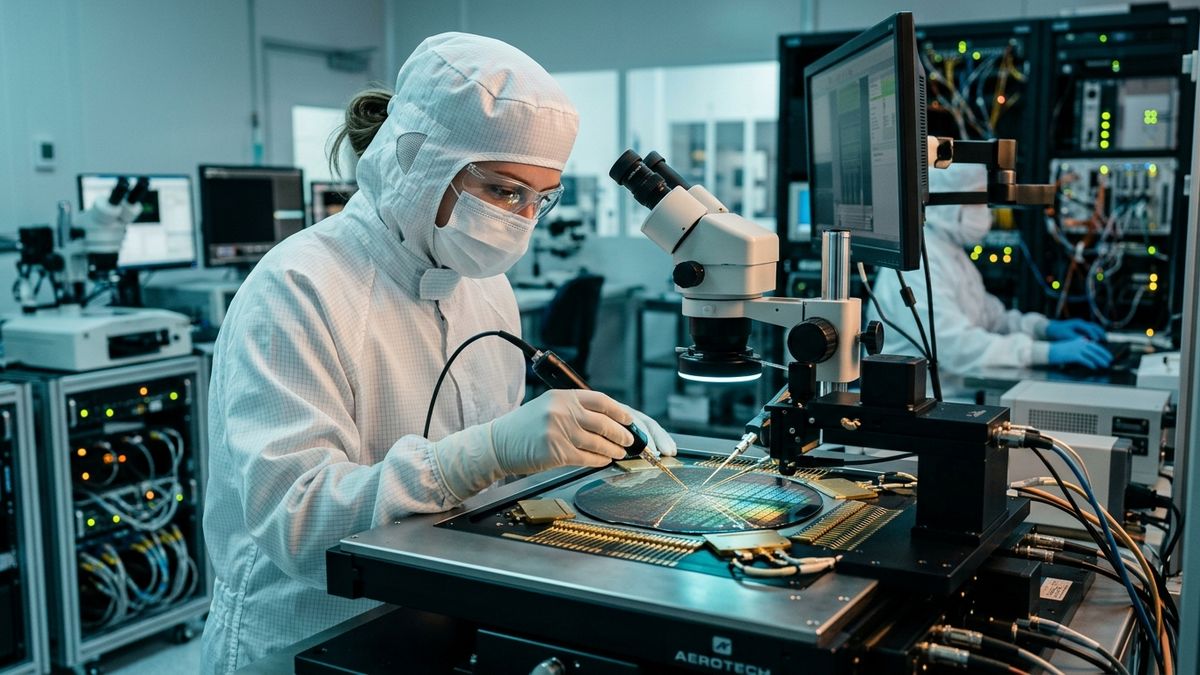
- Semiconductor System Architecture: Hyperscale cloud providers, automotive OEMs, and smartphone manufacturers are designing bespoke domain-specific chips and NPUs rather than relying on off-the-shelf silicon, driving relentless demand for VLSI design and verification talent.
- Connected Medical Diagnostics: Remote surgical robotics, wearable health monitors, and digital pathology imaging require medical-grade embedded firmware that complies with strict global regulatory standards.
- Smart Industrial Manufacturing: Digital twin simulations, predictive IoT maintenance, and robotic automation are overhauling traditional factory floors.
"India built its global economic reputation by modernizing the world's enterprise databases and business applications,"emphasized leading engineering executives. "In the ER&D era, Indian engineers are designing the microchips, electric drivetrains, and aerospace wings that power global commerce."
The GCC Evolution: From Back-Office Cost Centers to Strategic R&D Owners
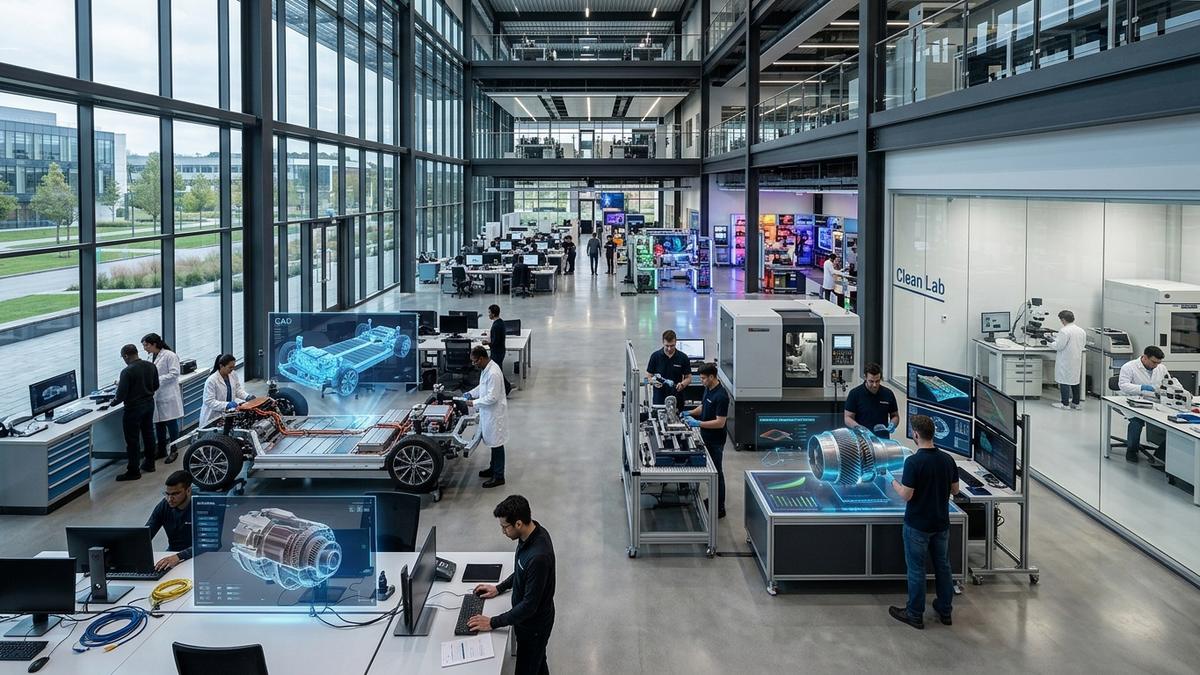
India's ER&D landscape is anchored by two complementary pillars: independent pure-play engineering services providers (such as Tata Technologies, L&T Technology Services, KPIT, and HCLTech) and more than 1,600 Global Capability Centers (GCCs) established by Fortune 500 corporations.
Over the past five years, these GCCs have undergone a profound structural metamorphosis:
1. Global Mandate Ownership: Centers in Bengaluru, Hyderabad, Pune, and Chennai no longer merely support foreign headquarters; they hold worldwide patent and intellectual property ownership for entire product lines.
2. Cross-Disciplinary R&D Teams: Automotive leaders like Mercedes-Benz, Stellantis, and Volvo execute complete infotainment, telematics, and chassis software engineering from their Indian tech centers.
3. Aerospace and Space Engineering: Global aerospace giants including Boeing, Airbus, and Collins Aerospace leverage Indian engineering hubs for avionics flight control software, CFD aerodynamics modeling, and sustainable aviation fuel design.
This rapid expansion of deeptech and hardware innovation is evident across commercial and defense domains, as demonstrated by EyeROV delivering indigenous military-grade underwater robotics to the Indian Navy.
The structured table below details the projected global ER&D spending across major industry sectors and India's addressable market share through 2030:
| Industry Sector | Global 2030 ER&D Spend ($B) | India Projected Share ($B) | Core Technological Innovation Drivers |
|---|---|---|---|
| Automotive & Mobility | $520 – $560 Billion | $38 – $45 Billion | Software-Defined Vehicles, EV battery architecture, ADAS perception |
| Software Products & Cloud | $600 – $650 Billion | $42 – $50 Billion | Generative AI infrastructure, cloud-native SaaS, edge microservices |
| Semiconductors & Electronics | $380 – $420 Billion | $26 – $34 Billion | Custom NPU design, analog VLSI, advanced packaging tape-outs |
| Aerospace & Defense | $240 – $270 Billion | $14 – $18 Billion | Avionics flight code, UAV autonomy, lightweight composite structural modeling |
| Healthcare & Medical Devices | $210 – $240 Billion | $12 – $16 Billion | Telehealth IoT, robotic surgery firmware, FDA-compliant digital platforms |
| Industrial & Energy Transition | $290 – $330 Billion | $16 – $22 Billion | Smart grid telemetry, industrial digital twins, hydrogen electrolysis R&D |
Capitalizing on the $2.5 Trillion Frontier: Policy and Talent Assets
To capture its full share of the $2.5 trillion prize, India possesses critical structural advantages that competing geographies struggle to replicate:
- Massive Engineering Talent Pipeline: India graduates more than 1.5 million engineers annually, with an increasing proportion specializing in mechatronics, embedded systems, robotics, and artificial intelligence.
- Government Catalysts & PLI Incentives: Policies such as the Design-Linked Incentive (DLI) for semiconductors, the National Deeptech Startup Policy, and state-level GCC incentives (like Uttar Pradesh establishing 6,000-job tech cities and deeptech hubs) create attractive fiscal climates for foreign direct investment.
- Decentralization to Tier-2 Cities: Tier-2 engineering hubs—including Coimbatore, Thiruvananthapuram, Vadodara, and Mysuru—are rapidly emerging as cost-effective centers for precision engineering and CAD prototyping.
As global corporations navigate geopolitical tensions, supply chain diversification, and rapid technological disruption, India's deep bench of engineering talent offers unmatched scale and technical agility. By advancing beyond traditional software support into comprehensive product design and sovereign engineering R&D, India is charting a definitive path to become the primary engineering workshop of the twenty-first century, complementing next-generation telecom 6G testbeds and AI network operations.
Frequently Asked Questions
What is Engineering Research and Development (ER&D) and how does it differ from traditional IT services?
While traditional IT services focus on business application maintenance, enterprise ERP, and infrastructure management, ER&D encompasses the core scientific design, hardware prototyping, embedded software, and engineering simulation of physical products.
Why is global ER&D spending projected to reach $2.5 trillion by 2030?
Massive secular disruptions—such as software-defined electric vehicles, semiconductor customization, aerospace decarbonization, and connected medical devices—are forcing global multinational corporations to dramatically escalate digital engineering spend.
How much of the global ER&D market can India realistically capture?
According to industry projections by NASSCOM and global advisory firms, India's ER&D market share is expected to surge from $45 billion to between $130 billion and $170 billion by 2030, representing over 22% of the global outsourced ER&D market.
What role do Global Capability Centers (GCCs) play in India's ER&D boom?
Over 1,600 multinational GCCs located across Bengaluru, Hyderabad, Pune, and Chennai have evolved from back-office support into strategic innovation centers owning end-to-end global product design.
Primary Sources & Official References
- NASSCOM & BCG: Global ER&D Pulse and India's Engineering Export Horizon Report
- Ministry of Commerce & Industry, Government of India: Services Export Promotion Council (SEPC)
- Zinnov: Global Capability Centers (GCC) Engineering Horizons Annual Study
- Reserve Bank of India (RBI): High-Tech and Engineering Services Trade Statistics