ISRO and IN-SPACe expand private access to world-class launchpads, cryogenic test facilities, and orbital IP, propelling India's commercial NewSpace economy toward $44 billion.
Executive Key Takeaways
- ISRO and IN-SPACe expand private access to world-class launchpads, cryogenic test facilities, and orbital IP, propelling India's commercial NewSpace economy toward $44 billion.
- India is establishing an agile, globally competitive NewSpace industrial base, stated Dr. Pawan Goenka, Chairman of IN-SPACe. The government has transitioned from being the sole operator and manufacturer of space technology to an enabler, regulator, and primary customer of commercial space innovation. By opening Sriharikota and transferring proven launch and satellite IP to private industry, we are unlocking exponential entrepreneurial velocity.
- Key Benchmark: **Skyroot Aerospace** — Dedicated Small Satellite Launchers
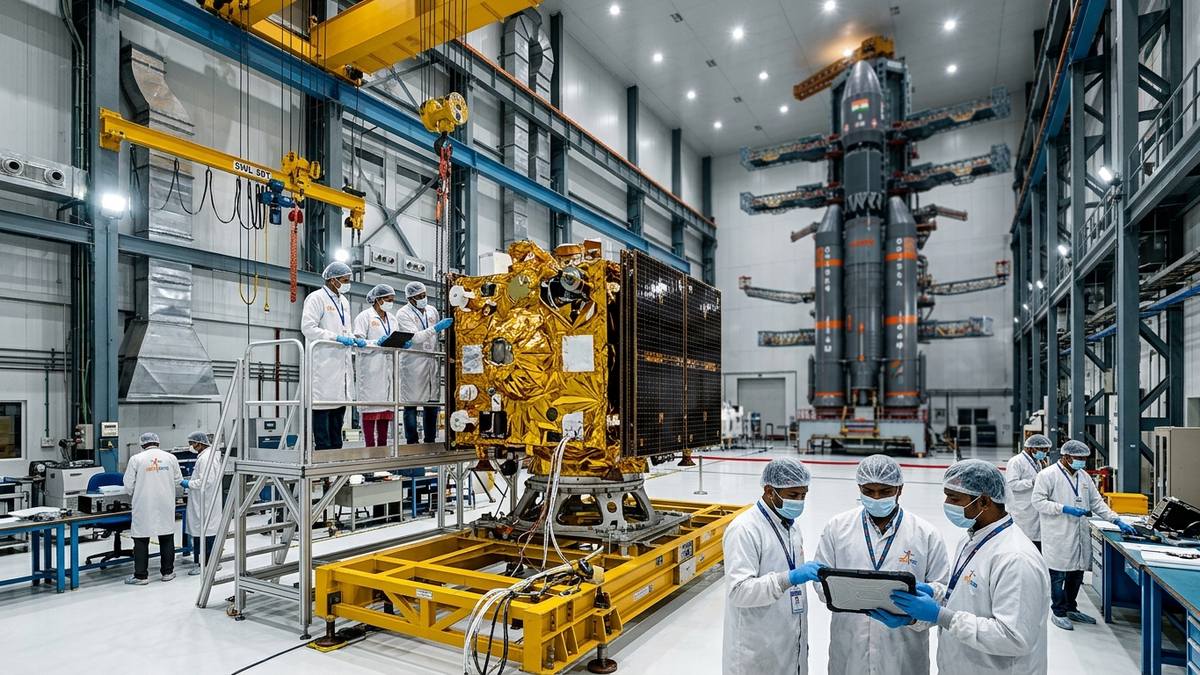
BENGALURU & SRIHARIKOTA — In a historic expansion of India's space commercialization framework, the Indian Space Research Organisation (ISRO), working in synchronized coordination with single-window regulatory nodal agency IN-SPACe (Indian National Space Promotion and Authorization Centre) and commercial enterprise NewSpace India Limited (NSIL), has dismantled longstanding institutional barriers to grant private aerospace ventures comprehensive, commercial-grade access to national space flight assets. Private launch vehicle innovators, earth observation satellite constellation operators, and deep-space propulsion startups are now authorized to utilize ISRO's world-class launch complexes at Satish Dhawan Space Centre (SDSC) Sriharikota, cryogenic propulsion test facilities in Mahendragiri, acoustic test bays in Bengaluru, and deep space communication telemetry stations.
This structural opening marks a decisive transition in India's space doctrine. By offloading commercial satellite launches, small launch vehicle manufacturing, and low Earth orbit (LEO) payload deployment to agile private startups, ISRO can concentrate its scientific resources on high-complexity planetary exploration, human spaceflight (the Gaganyaan mission), and lunar exploration architectures. Private industry, backed by high-conviction venture capital funds like Piper Serica's Bharat Tech Fund Targeting Spacetech and Deeptech, is primed to transform India's global space market share from 2% to over 8%—powering an indigenous space economy projected to reach $44 billion by 2033.
Institutional Liberalisation: Dismantling the State Space Monopoly
For over half a century, India's space program operated as a closed sovereign vertical. While private industrial giants like Larsen & Toubro (L&T), Godrej Aerospace, and Hindustan Aeronautics Limited (HAL) acted as trusted tier-1 component fabricators for the Polar Satellite Launch Vehicle (PSLV) and Geosynchronous Satellite Launch Vehicle (GSLV), they functioned strictly as subcontractors following state blueprints without possessing independent mission authority.
The enactment of the Indian Space Policy and the statutory empowerment of IN-SPACe have fundamentally revised this architecture:
1. Autonomous Mission Authorization: IN-SPACe acts as a single-window judicial and operational regulator, empowering private enterprises to construct launchpads, launch orbital rockets, and operate private satellite frequencies without bureaucratic entanglement.
2. Infrastructure Parity: Private aerospace ventures can lease high-value ISRO testing assets—such as the Vikram Sarabhai Space Centre (VSSC) hypersonic wind tunnels and the ISRO Propulsion Complex (IPRC) test stands—at transparent, standardized commercial rates.
3. 100% Foreign Direct Investment (FDI): The liberalized FDI framework allows up to 74% foreign direct investment under the automatic route for satellite manufacturing and data operations, and up to 49% for private launch vehicles, drawing international institutional capital into Indian aerospace startups.
"India is establishing an agile, globally competitive NewSpace industrial base,"stated Dr. Pawan Goenka, Chairman of IN-SPACe. "The government has transitioned from being the sole operator and manufacturer of space technology to an enabler, regulator, and primary customer of commercial space innovation. By opening Sriharikota and transferring proven launch and satellite IP to private industry, we are unlocking exponential entrepreneurial velocity."
Rocket Innovators: Scaling Skyroot and Agnikul Commercial Launches
The most tangible manifestations of ISRO's infrastructure-sharing protocol are visible in the private launch vehicle sector, where Indian startups are preparing to deliver dedicated, low-cost launch services to international satellite operators:
Skyroot Aerospace: Vikram-I Orbital Flight Manifest
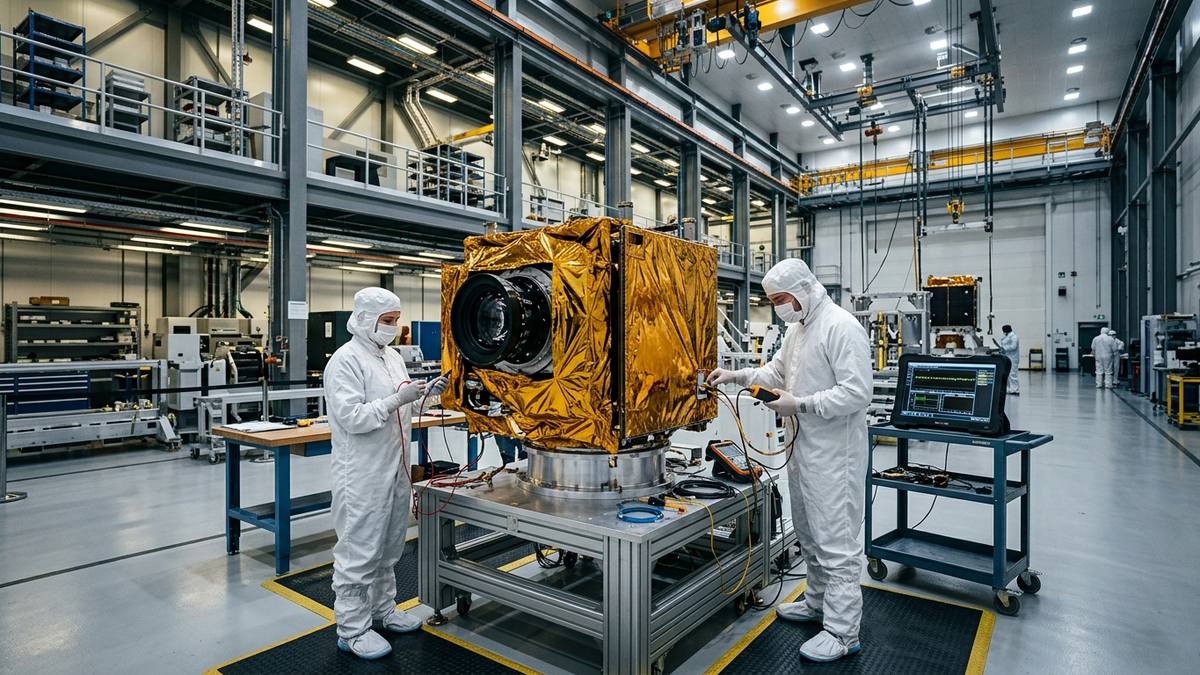
Following its historic suborbital flight of Vikram-S in November 2022, Hyderabad-headquartered Skyroot Aerospace is preparing the commercial orbital maiden flight of Vikram-I. Engineered with multi-stage solid-fuel motors, carbon-composite fuselage structures, and a 3D-printed liquid-fuel upper stage (Raman), Vikram-I can deliver up to 300 kilograms of payload into low Earth orbit. Skyroot's engineering teams conduct hot-fire validation tests directly at ISRO's propulsion test facilities, radically truncating capital expenditures.
Agnikul Cosmos: Launchpad Alpha and Mobile Integration
Chennai-based Agnikul Cosmos achieved a world-first milestone in May 2024 by successfully launching its Agnibaan SOrTeD (Sub-Orbital Technology Demonstrator) rocket, propelled by Agnilet—the world's first single-piece, 3D-printed semi-cryogenic rocket engine running on industrial kerosene and liquid oxygen (LOX). Agnikul was granted permission by ISRO to build Launchpad Alpha, India's first privately owned and operated launchpad and mission control center within the high-security perimeter of SDSC Sriharikota.
Strategic Overview: India's Leading Private Space Pioneers
The structured overview below highlights the prominent private spacetech ventures actively leveraging ISRO facilities and commercializing Indian aerospace IP:
| Enterprise | Core Domain | Flagship Hardware / Mission | Key ISRO / IN-SPACe Collaboration | Commercial Market Target |
|---|---|---|---|---|
| Skyroot Aerospace | Dedicated Small Satellite Launchers | Vikram-I (300kg LEO payload) & Vikram-II | Hot-fire motor testing at IPRC; dedicated launch bays at SDSC Sriharikota | Global rideshare & dedicated orbital small-sat launch services |
| Agnikul Cosmos | Customizable On-Demand Launch Vehicles | Agnibaan (3D-printed semi-cryogenic rocket) | Private launchpad (Launchpad Alpha) inside Sriharikota; LOX cryogenic supply | Rapid-turnaround bespoke launch for micro & nano-satellites |
| Pixxel | Hyperspectral Earth Observation | Fireflies constellation (5m resolution) | Vibration, acoustic testing at ISITE Bengaluru; PSLV / SSLV launch slots | Precision agriculture, mining, emissions tracking & defence imagery |
| GalaxEye Space | Hybrid SAR & Optical Space Sensors | Drishti satellite sensor payload | Payload thermal vacuum testing at ISAC; data distribution authorization | All-weather, day-and-night maritime surveillance & infrastructure monitoring |
| Bellatrix Aerospace | In-Orbit Propulsion & Space Mobility | Hall-effect thrusters & green propulsion | Space-qualification chamber testing at VSSC; orbital transfer vehicle demo | In-orbit satellite repositioning, collision avoidance & de-orbiting |
Earth Observation Constellations, In-Orbit Propulsion, and Downstream Analytics
Beyond rocket hardware, India's private space sector is building high-margin orbital infrastructure and data monetization engines:
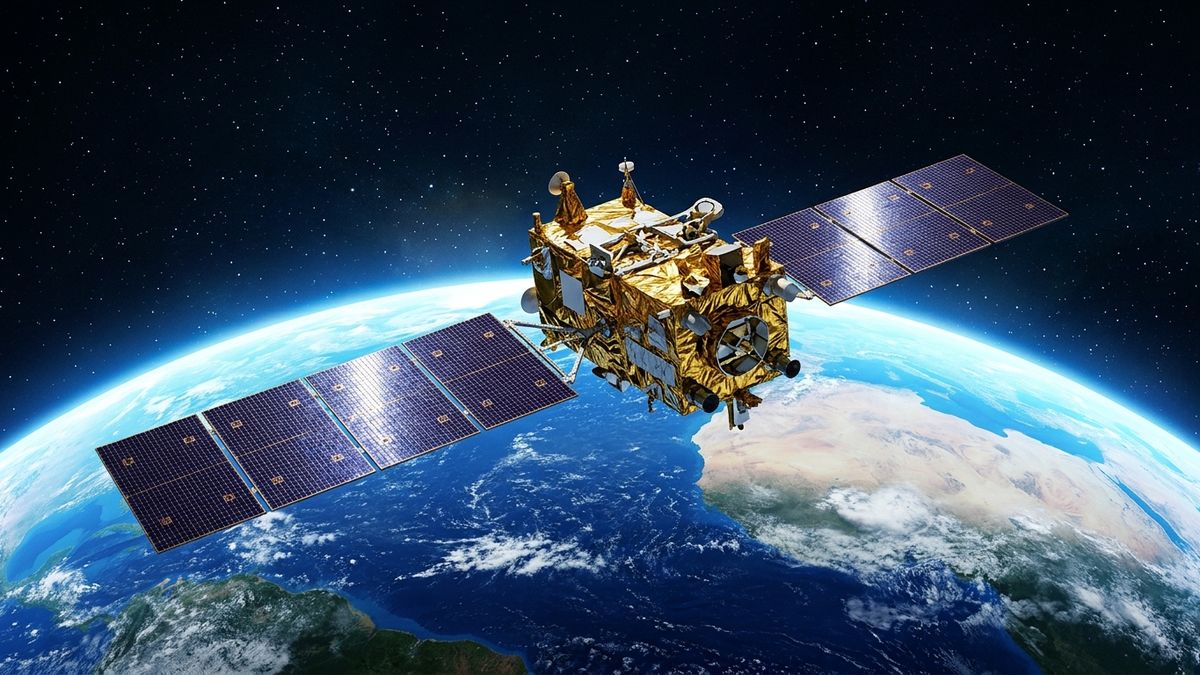
- Pixxel's Hyperspectral Constellation: Bengaluru-headquartered Pixxel is deploying Fireflies, an advanced commercial hyperspectral satellite constellation that captures imagery across hundreds of contiguous spectral bands at 5-meter resolution. This data allows global clients to detect soil nutrient deficiencies, monitor forest biodiversity, map pipeline methane leaks, and identify defense targets invisible to standard multispectral cameras.
- GalaxEye's All-Weather SAR Fusion: Spun out of IIT Madras, GalaxEye is pioneering spaceborne sensors that fuse Synthetic Aperture Radar (SAR) and high-resolution optical imagery onto a single payload, piercing through cloud cover and darkness to deliver actionable maritime and border security analytics.
- Bellatrix Aerospace's Green Satellite Propulsion: Bellatrix has flight-qualified microwave plasma thrusters and non-toxic green chemical propulsion systems, helping satellite manufacturers worldwide meet strict international anti-space-debris mandates.
These downstream space-data ventures are creating vast data pipelines that plug directly into enterprise AI compute centers, such as the high-density infrastructure detailed in TCS's Massive ₹62,000 Crore AI Data Centre in Hyderabad and deeptech innovation programs like LTTS's Platform to Help Deeptech Startups Scale.
Technology Transfer: The SSLV and PSLV Shift to Private Industry
To transform India into a global launch hub, ISRO and NSIL are actively transitioning operational launch systems entirely into private hands:
1. Commercial Transfer of the Small Satellite Launch Vehicle (SSLV): ISRO is transferring complete manufacturing, integration, and launch intellectual property for the three-stage, all-solid SSLV to qualified private industry consortia. The SSLV requires minimal launch infrastructure and can be assembled within 72 hours by a compact team of six personnel, providing a commercial workhorse capable of launching 500 kg payloads at industry-beating cost-per-kilogram rates.
2. PSLV Industry Consortium: A landmark joint venture between Hindustan Aeronautics Limited (HAL) and Larsen & Toubro (L&T) is completing the end-to-end commercial production of the legendary PSLV rocket, freeing ISRO engineers from routine launch operations to focus on deep-space scientific exploration.
3. Advanced Sensor and Semiconductor Metrology: Commercial space payloads are driving domestic demand for ultra-reliable microelectronics and specialized defect metrology, as highlighted by Makr Microsystems Raising ₹10.2 Crore for Semiconductor Metrology.
Strategic Horizon: Realising a $44 Billion NewSpace Economy
India holds undeniable competitive advantages in the global space marketplace: world-class engineering talent, a frugal cost base, complete sovereign launch heritage, and an equatorial geographic position that maximizes rocket payload orbital velocity.
By opening the gates of Sriharikota, de-risking private capital with comprehensive regulatory clarity, and treating private aerospace startups as co-architects of national capability, ISRO is fostering an industrial aerospace revolution. As private launchpads stand alongside historic state towers on the shores of the Bay of Bengal, India's private space sector is ready to claim its rightful share of the $500 billion global space economy.