HCLTech collaborates on AI-driven traffic insights and computer vision signal orchestration, accelerating intelligent transportation infrastructure across smart cities.
Executive Key Takeaways
- HCLTech collaborates on AI-driven traffic insights and computer vision signal orchestration, accelerating intelligent transportation infrastructure across smart cities.
- Urban traffic is inherently a non-linear, dynamic optimization problem that static timer cycles simply cannot solve, explained senior smart infrastructure engineering directors. By implementing closed-loop reinforcement learning at the junction level, intersections can communicate with neighboring junctions to generate dynamic green waves, clearing gridlock before it cascades across city corridors.
- Key Benchmark: **Signal Timing Logic** — Static pre-programmed time blocks
NOIDA & NEW DELHI — Global IT services and engineering consulting conglomerate HCLTech is actively collaborating with municipal planning corporations, transport departments, and smart city concessionaires to deploy AI-driven traffic optimization and predictive mobility analytics. The technical initiative integrates edge computer vision, deep learning vehicular classification models, and adaptive signal timing orchestration to mitigate chronic metropolitan congestion, curb vehicular idling emissions, and establish green corridors for emergency medical vehicles.
The move highlights an accelerating trend among India's premier IT conglomerates: transitioning from traditional software support contracts to high-margin cyber-physical engineering, Intelligent Transportation Systems (ITS), and municipal infrastructure automation.
This smart infrastructure development connects to software engineering paradigms explored in The Agentic Shift in Indian IT and aligns with logistical network dynamics analyzed in Quick Commerce 2.0: Dark Store Economics.
Engineering Urban Flow: The Architecture of AI Traffic Orchestration
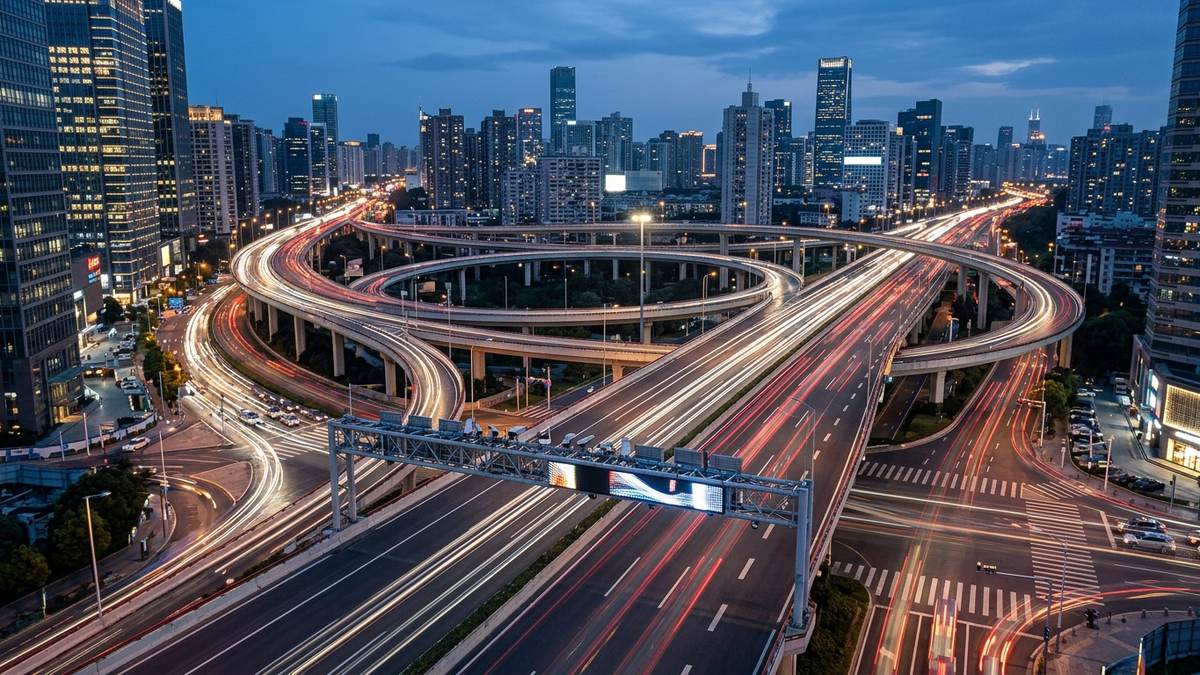
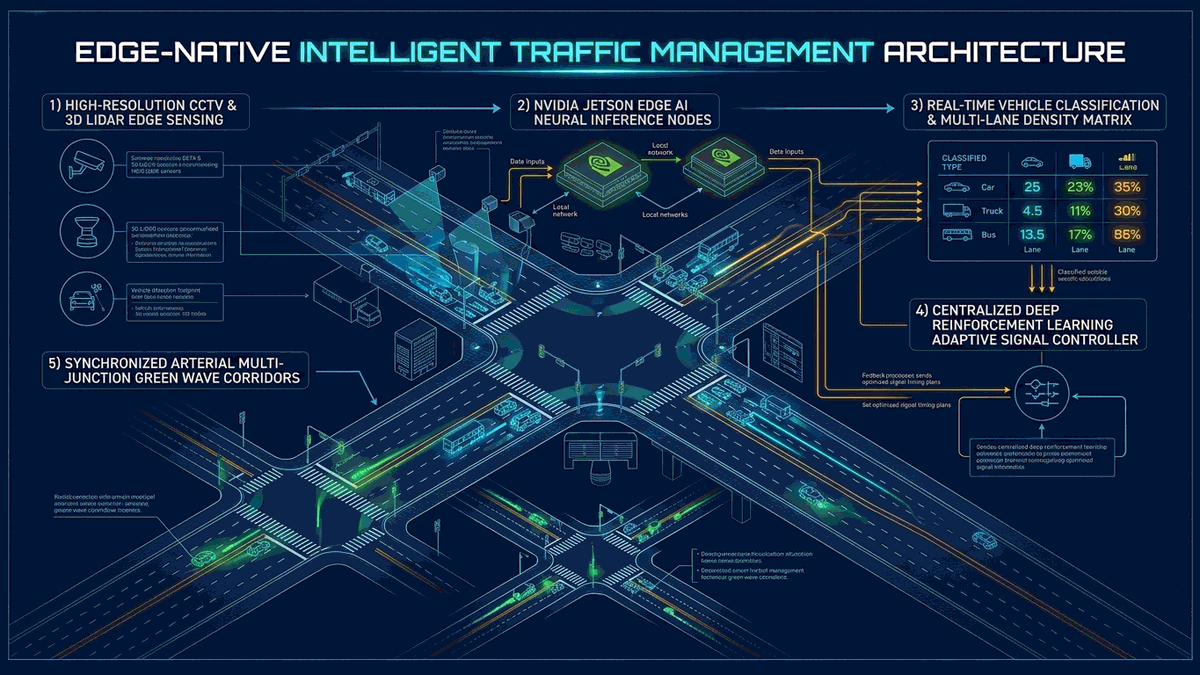
Traditional urban traffic management across Indian cities relies either on rigid pre-timed signal cycles—which fail to adapt to real-time bottlenecks—or manual traffic police interventions that cannot coordinate across adjacent intersections. HCLTech's smart mobility platform establishes a decentralized, multi-tiered edge computing architecture that analyzes and adjusts traffic signals autonomously.
Multi-Spectrum Edge Computer Vision
At each monitored intersection, specialized edge processing hardware runs high-frequency computer vision models to perform continuous traffic assessment:
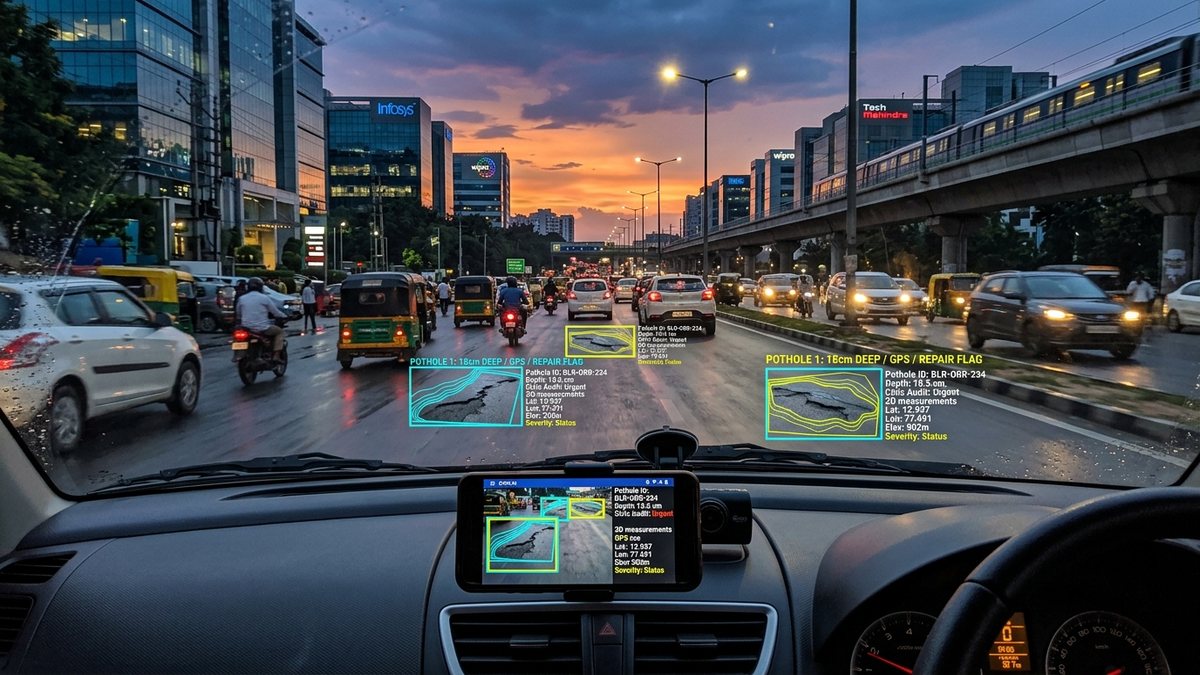
1. Multi-Class Vehicle Classification: Identifying and segmenting diverse vehicular types—two-wheelers, auto-rickshaws, city buses, passenger cars, and commercial trucks—to calculate exact passenger car units (PCU) per lane rather than simplistic vehicle counts.
2. Queue Length & Wait-Time Estimation: Measuring real-time tailback distances behind stop lines to compute instantaneous congestion indices.
3. Automated Incident & Stalled Vehicle Detection: Identifying broken-down vehicles, illegal lane blockages, or pedestrian hazards within sub-300 milliseconds, automatically broadcasting rerouting alerts to digital message signs and navigation apps.
"Urban traffic is inherently a non-linear, dynamic optimization problem that static timer cycles simply cannot solve,"explained senior smart infrastructure engineering directors. "By implementing closed-loop reinforcement learning at the junction level, intersections can communicate with neighboring junctions to generate dynamic green waves, clearing gridlock before it cascades across city corridors."
Comparative Performance: Legacy Traffic Signals vs. AI Adaptive Systems
The table below outlines key operational parameters and real-world performance benchmarks comparing conventional traffic signaling systems with AI-driven adaptive management:
| Traffic Performance Metric | Fixed-Time Legacy Signals | Actuated Sensor Loops (Inductive) | HCLTech AI Adaptive Platform |
|---|---|---|---|
| Signal Timing Logic | Static pre-programmed time blocks | Threshold triggers from buried loops | Dynamic real-time reinforcement learning |
| Adaptability to Traffic Spikes | Zero (Causes phantom delays) | Low (Prone to sensor wear & tear) | Instantaneous (< 2 seconds per cycle) |
| Heterogeneous Traffic Handling | Poor (Assumes uniform car flow) | Inadequate (Fails on light two-wheelers) | Advanced (Recognizes 14+ vehicle classes) |
| Average Corridor Travel Latency | Baseline (High congestion) | 8% – 12% Reduction | 22% – 34% Measurable Latency Reduction |
| Vehicular Idling Emissions | High (Extended fuel burn at reds) | Moderate reduction | 18% – 26% Carbon & PM2.5 Reduction |
| Emergency Vehicle Preemption | Manual police walkie-talkie override | Manual priority toggle at control desk | Automated GPS & Vision Green Corridor |
| Hardware Maintenance Overhead | Low capital, high human cost | High road maintenance (road excavation) | Optical non-intrusive overhead camera mounting |
Smart Cities Integration and Municipal Deployment
HCLTech's smart mobility systems are designed to interface seamlessly with existing Integrated Command and Control Centres (ICCC) deployed under India’s National Smart Cities Mission. By streaming aggregated metadata—rather than bandwidth-heavy raw video feeds—the platform respects municipal bandwidth constraints while providing city planners with unprecedented analytical depth.
Key deployment modules include:
- Automated Green Wave Corridors: Dynamically synchronizing arterial traffic signals to create uninterrupted green passages for registered ambulances and fire tenders based on real-time GPS coordinates.
- Dynamic Variable Message Signs (VMS): Providing drivers with real-time speed recommendations to hit upcoming signals during green phases, smoothing overall traffic velocity.
- Urban Planning Analytics: Generating granular origin-destination heatmaps and bottleneck analytics to inform future flyover, metro, and road widening capital investments.
Commercial Viability and Exporting Urban Tech to Global Metros
Beyond domestic municipal pilots, HCLTech views smart mobility engineering as a major export opportunity across Europe, the Middle East, and North America. Metropolitan regions globally face aging highway infrastructure, rising carbon emission penalties, and worsening urban congestion.
By packaging advanced AI computer vision, IoT edge hardware, and predictive analytics into an enterprise-grade municipal platform, HCLTech is demonstrating that Indian engineering firms can deliver complex, mission-critical physical infrastructure systems that make modern cities smarter, cleaner, and more livable.