India and France expand their historic space alliance, targeting high-resolution Earth observation with TRISHNA, green rocket propulsion, and orbital debris mitigation.
Executive Key Takeaways
- India and France expand their historic space alliance, targeting high-resolution Earth observation with TRISHNA, green rocket propulsion, and orbital debris mitigation.
- Our partnership with France is rooted in shared scientific values, mutual technological respect, and strategic autonomy, noted a senior ISRO scientist familiar with the bilateral dialogue. As low-Earth orbit becomes increasingly congested and climate monitoring requires unprecedented thermal resolution, uniting ISRO's agile engineering with CNES’s precision instrumentation creates unmatched global capabilities.
- Key Benchmark: **TRISHNA (Earth Observation)** — Dual-payload Thermal IR (CNES) + VNIR/SWIR (ISRO)
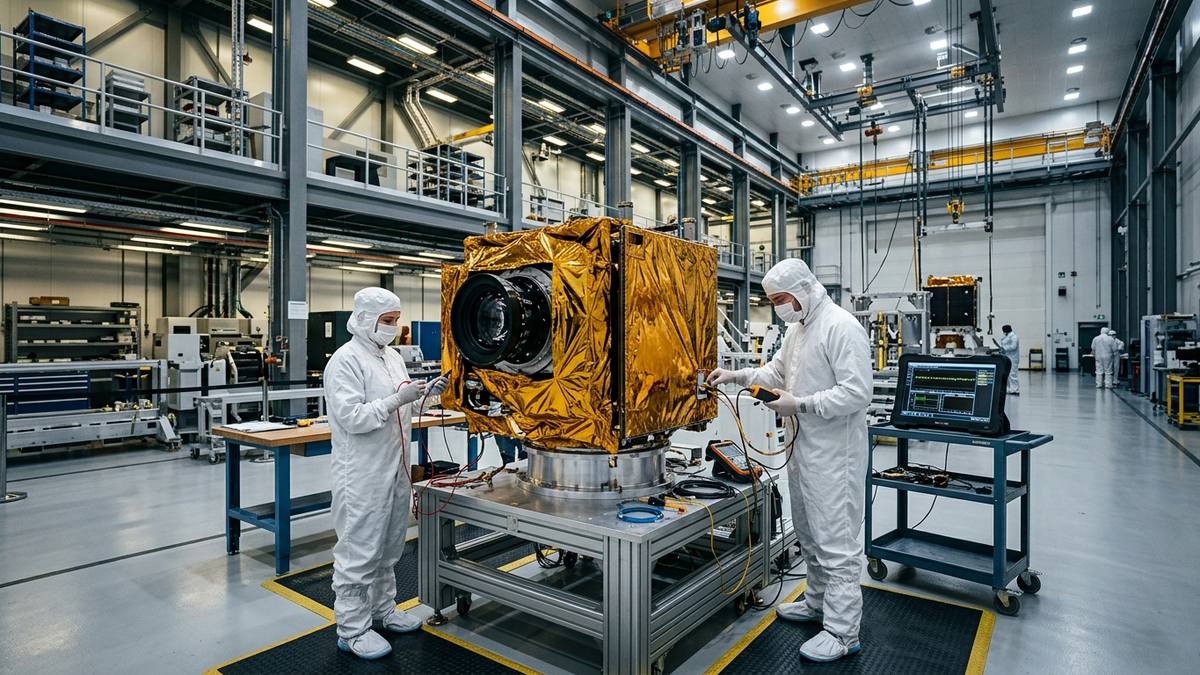
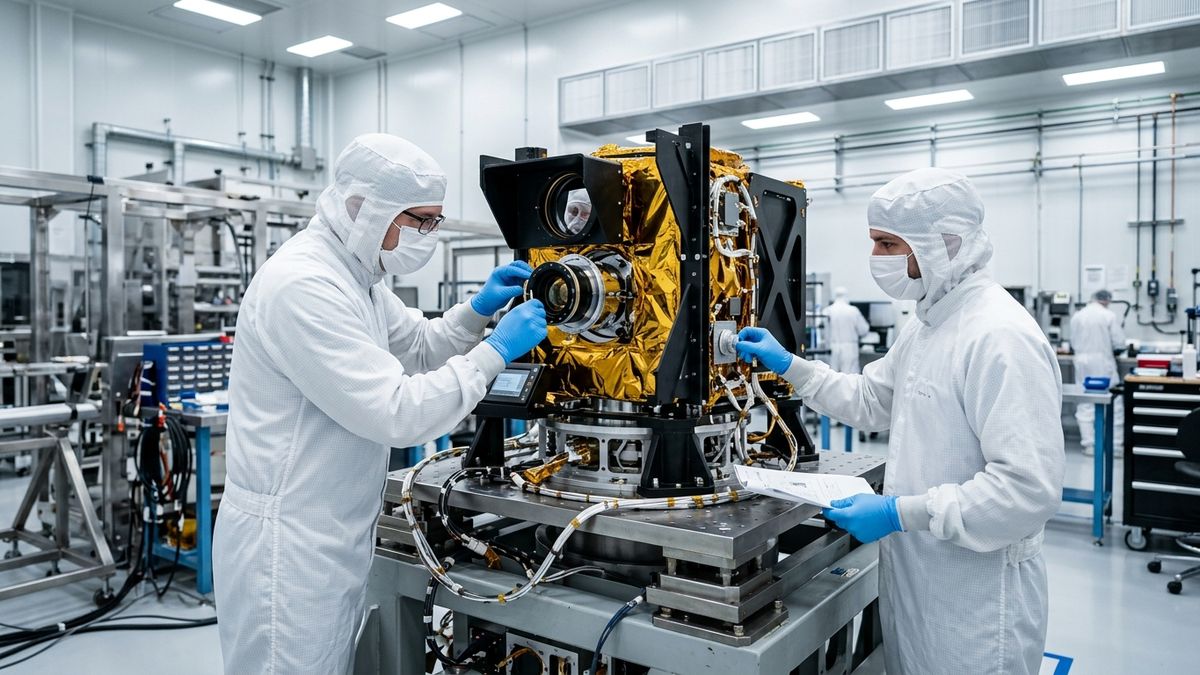
India and France have taken definitive steps to elevate their six-decade-old bilateral space partnership into an expansive next-generation alliance, focusing on high-resolution Earth observation, cutting-edge rocket propulsion technologies, and global space sustainability. Senior delegations from the Indian Space Research Organisation (ISRO) and the French National Centre for Space Studies (CNES) formalized strategic agreements that will see the two spacefaring nations co-develop advanced thermal imaging satellites, deploy orbital debris tracking corridors, and open new commercial aerospace pathways for private space startups.
The strategic pact arrives at a critical juncture when international space cooperation is pivoting from exploratory prestige missions toward actionable Earth-monitoring capabilities, climate change mitigation, and sovereign commercial launch infrastructure.
A Legacy of Trust: From Thumba Sounding Rockets to Deep-Space Exploration
The Indo-French space relationship represents one of the longest, most resilient bilateral technical partnerships in modern aerospace history. Dating back to the 1960s, when France’s early space pioneers assisted India in launching sounding rockets from the Thumba Equatorial Rocket Launching Station in Kerala, the two nations have consistently collaborated without geopolitical interruption.
Over past decades, ISRO and CNES have executed monumental joint missions, including the Megha-Tropiques satellite launched in 2011 to study tropical meteorological cycles and convective systems, and the SARAL (Satellite with ARgos and ALtiKa) mission in 2013 for precise oceanographic altimetry. The new cooperation roadmap builds directly upon this legacy, expanding into sovereign high-resolution satellite constellations and space situational awareness.
"Our partnership with France is rooted in shared scientific values, mutual technological respect, and strategic autonomy,"noted a senior ISRO scientist familiar with the bilateral dialogue. "As low-Earth orbit becomes increasingly congested and climate monitoring requires unprecedented thermal resolution, uniting ISRO's agile engineering with CNES’s precision instrumentation creates unmatched global capabilities."
Indo-French Strategic Space Pipeline: Joint Scientific R&D → Advanced Optical & Thermal Sensor Assembly → Joint Payload Integration → ISRO PSLV/GSLV Orbital Launch → Shared Ground Station Telemetry
Core Pillars of the Next Space Frontier
The deepened bilateral cooperation spans four interconnected technological frontiers:
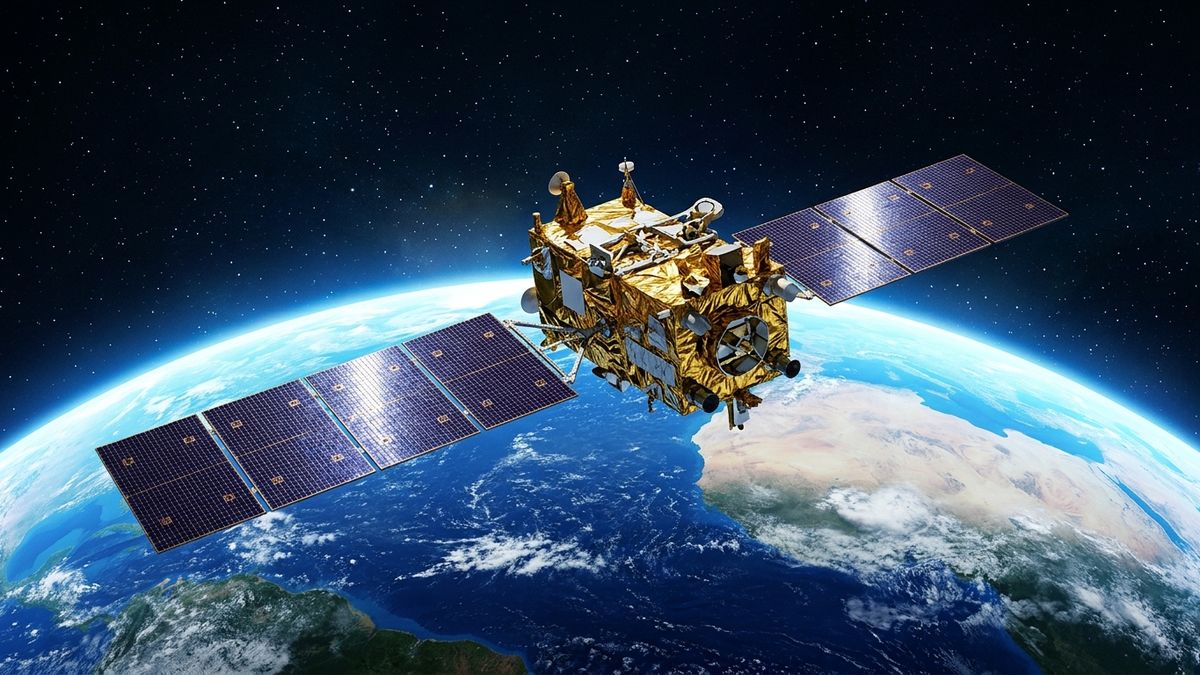
1. TRISHNA Satellite Mission (Thermal Infra-Red Imaging Satellite for High-resolution Natural resource Assessment): The flagship joint mission designed to provide unmatched high-resolution thermal infrared imagery of the Earth’s surface. Operating with a 57-meter spatial resolution and a 3-day revisit frequency, TRISHNA will revolutionize precision agriculture, urban heat island tracking, and continental water resource monitoring.
2. Next-Generation Space Propulsion & Green Propellants: Collaborative research between ISRO's Liquid Propulsion Systems Centre (LPSC) and French aerospace contractors to develop eco-friendly satellite propellants, high-efficiency Hall-effect electric thrusters, and reusable launcher recovery mechanics.
3. Space Situational Awareness (SSA) & Orbital Debris Remediation: Establishing synchronized radar and optical tracking corridors to monitor over 30,000 pieces of lethal space debris in low-Earth orbit (LEO), ensuring the safety of crewed missions and critical telecommunications satellites.
4. Commercial NewSpace Startup Integration: Fostering joint ventures between Indian space startups—such as Pixxel, Agnikul Cosmos, and Skyroot Aerospace—and the French aerospace supply chain, supported by France's space agency and India's IN-SPACe (Indian National Space Promotion and Authorization Centre).
Technical Specifications: Indo-French Strategic Space Deliverables
The benchmark matrix below details the core engineering parameters, instrumentation, and mission profiles governing the new ISRO-CNES joint initiatives:
| Mission / Strategic Domain | Key Instrumentation & Technology | Revisit & Resolution Target | Operational Objectives | Lead Agencies |
|---|---|---|---|---|
| TRISHNA (Earth Observation) | Dual-payload Thermal IR (CNES) + VNIR/SWIR (ISRO) | 57m spatial resolution / 3-day revisit rate | Evapotranspiration, crop stress, urban heat mapping | ISRO & CNES Joint Teams |
| Space Situational Awareness | Synchronized ground-based optical tracking & radar | Real-time orbital tracking (< 10cm debris) | Collision avoidance, spacecraft protection, LEO safety | ISRO SSA Directorate & CNES SSA Center |
| Electric Propulsion Systems | Xenon/Krypton Hall-effect thrusters (5 kW class) | > 2,000 seconds specific impulse (Isp) | Station-keeping for geostationary & deep-space probes | LPSC Trivandrum & French Aerospace Labs |
| Maritime Domain Awareness | Constellation of AIS/optical maritime tracking sats | Near real-time Indian Ocean tracking | Monitoring illegal fishing, piracy, and sea lanes | Indian Navy, ISRO, and French Marine Nationale |
| Gaganyaan & Astronautics | Space medicine kits, crew life-support telemetry | Human spaceflight qualification protocols | Astronaut physiological monitoring in microgravity | ISRO HSFC & CADMOS (France) |
Commercial NewSpace Synergy and Startup Corridors
The expansion of bilateral ties is purposefully designed to transcend government agencies and energize private enterprise. India's recent space sector liberalization—which dismantled state monopolies and established IN-SPACe—has enabled domestic deeptech ventures to build sovereign launch vehicles and hyperspectral constellations.
As outlined in recent national trade discussions regarding India proposing global regulatory corridors to help tech startups expand overseas, bilateral corridors like Indo-French space pacts provide Indian spacetech startups direct access to European aerospace primes like Airbus Defence and Space, Thales Alenia Space, and Arianespace. Furthermore, initiatives supporting sovereign manufacturing such as India expanding electronics and hardware incubation beyond Bengaluru are ensuring that space-grade components, radiation-hardened PCBs, and optical payloads are manufactured domestically.
Strategic Autonomy and Global Space Diplomacy
In an increasingly fragmented international space landscape characterized by competing geopolitical blocs, the India-France space axis stands out as a paragon of strategic autonomy. Neither nation is content to be merely a junior partner in superpower-dominated space architectures; both prioritize sovereign launch autonomy, independent satellite navigation, and unhindered access to orbital domains.
As the international community navigates critical discussions at multinational platforms like the BRICS Summit focusing on sovereign innovation and supply chain resilience, Indo-French space collaboration provides a balanced, non-aligned model for peaceful, scientific space development that benefits developing nations across the Global South.
Looking Forward: Planetary Science and Deep-Space Exploration
Beyond low-Earth orbit and climate monitoring, ISRO and CNES are actively exploring telemetry and scientific payload sharing for future deep-space voyages, including prospective interplanetary missions to Venus and joint lunar exploration data exchange.
By anchoring their alliance in pragmatic Earth observation, cutting-edge thermal engineering, and sustainable orbital practices, India and France are ensuring that their six-decade friendship continues to define the next frontier of human spaceflight and cosmic exploration.