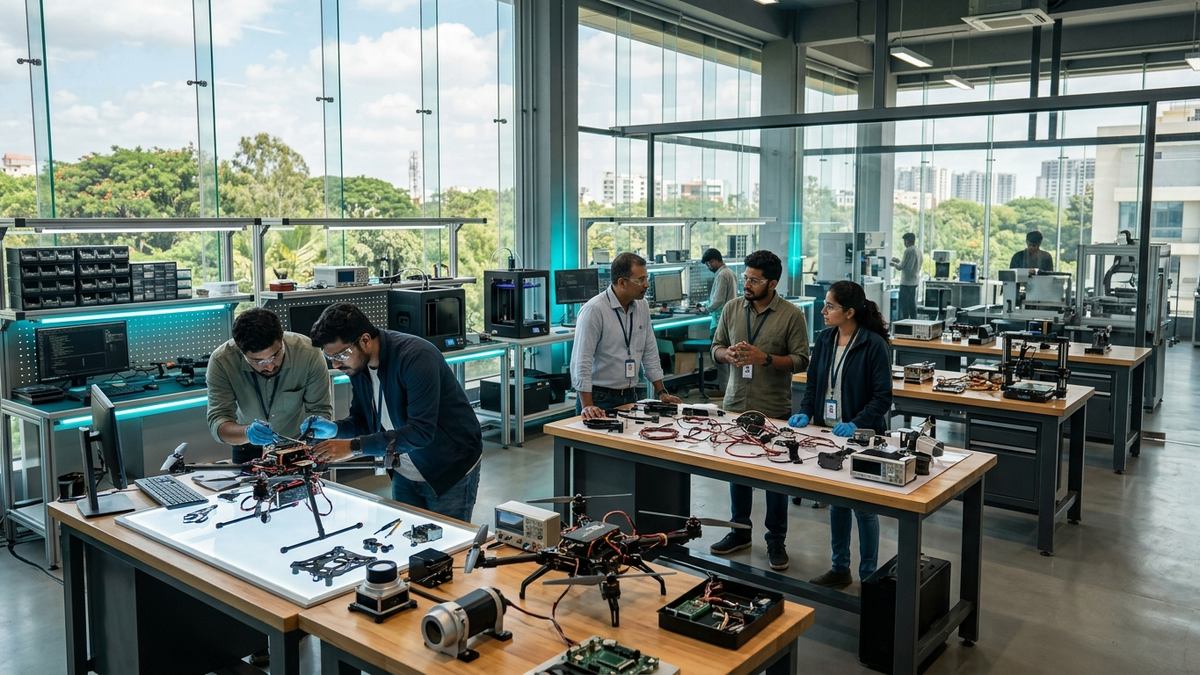
The Department of Biotechnology and BIRAC unveil BIO-NIVESH, an investor-connect platform designed to de-risk capital access for biotech and deep-tech startups.
Executive Key Takeaways
- The Department of Biotechnology and BIRAC unveil BIO-NIVESH, an investor-connect platform designed to de-risk capital access for biotech and deep-tech startups.
- The biotech revolution cannot be funded by generic venture playbooks designed for e-commerce, stated a senior DBT official during the launch symposium in New Delhi. With BIO-NIVESH, we are de-risking deep-tech innovation for private capital. When an investor evaluates a startup on BIO-NIVESH, they are reviewing technology that has already received rigorous technical validation through BIRAC's scientific committees, supported by our shared national bio-incubation infrastructure.
- Key Benchmark: **Typical Investment Horizon** — 3 – 5 years (rapid ARR growth expected)
NEW DELHI — In a major policy intervention to bridge the persistent early-stage financing gap confronting life sciences and biotechnology innovators, the Government of India has officially unveiled BIO-NIVESH (Biotechnology Innovation & Opportunity - National Investment, Venture & Entrepreneurship Showcase Hub). Launched collaboratively by the Department of Biotechnology (DBT) and the Biotechnology Industry Research Assistance Council (BIRAC) under the Ministry of Science and Technology, the platform establishes a direct institutional bridge connecting high-potential bio-entrepreneurs with domestic venture capital funds, international institutional investors, angel networks, and corporate venture arms.
The platform directly targets the notorious "valley of death" that plagues deep-tech bio-innovation—a phase characterized by lengthy clinical trials, heavy capital expenditure in bioprocessing infrastructure, and protracted regulatory pathways that traditionally deter generalist venture capitalists. By combining pre-vetted institutional diligence, government-backed co-investment facilities, and direct access to state-of-the-art biofoundries, BIO-NIVESH aims to accelerate India's bio-economy from its current $130 billion baseline toward the national target of $300 billion by 2030.
This initiative aligns with a broader surge of specialized venture capital targeting domestic deep-tech, exemplified by institutional deployments such as Piper Serica's Bharat Tech Fund Targeting Deep-Tech Startups and industrial acceleration frameworks like LTTS's Commercial Innovation Platform.
Overcoming the Biotech "Valley of Death": Why Specialized Capital Matters
Unlike software-as-a-service (SaaS) or consumer internet startups that can achieve minimum viable products (MVPs) in a matter of months with modest cloud compute budgets, biotechnology startups face structural commercialization barriers:
1. Extended Development Horizons: Developing novel biotherapeutics, microbial fermentation pathways, or engineered enzymes requires 5 to 8 years of rigorous laboratory experimentation and preclinical validation before commercial revenue is achieved.
2. Specialized Capital Expenditure: Procuring automated bioreactors, high-performance liquid chromatography (HPLC) units, mass spectrometers, and cleanroom cell-culture suites demands millions of dollars in upfront hardware investments.
3. Rigorous Multi-Tiered Regulation: Regulatory clearances across the Central Drugs Standard Control Organisation (CDSCO), Review Committee on Genetic Manipulation (RCGM), and Genetic Engineering Appraisal Committee (GEAC) create significant non-market friction.
BIO-NIVESH addresses these bottlenecks by serving as an end-to-end investment facilitator rather than a passive listing portal. Startups selected for the platform undergo rigorous scientific diligence by BIRAC domain panels, providing external venture investors with independent technical validation of proprietary patents, bioprocess yields, and molecular reproducibility.
"The biotech revolution cannot be funded by generic venture playbooks designed for e-commerce,"stated a senior DBT official during the launch symposium in New Delhi. "With BIO-NIVESH, we are de-risking deep-tech innovation for private capital. When an investor evaluates a startup on BIO-NIVESH, they are reviewing technology that has already received rigorous technical validation through BIRAC's scientific committees, supported by our shared national bio-incubation infrastructure."
Pillar Themes Aligned with the National BioE3 Policy
The rollout of BIO-NIVESH operationalizes key commercial mandates established under the Union Cabinet's flagship BioE3 (Biotechnology for Economy, Environment and Employment) policy:
- High-Value Biomanufacturing: Precision fermentation startups cultivating alternative proteins, dairy-identical caseins, and microbial single-cell oils to decouple food supply chains from agricultural land constraints.
- Smart Bio-Chemicals and Green Polymers: Microbial enzyme engineers synthesizing biodegradable polyhydroxyalkanoates (PHAs) and bio-surfactants, replacing petrochemical polymers with drop-in circular bio-alternatives.
- Advanced Biotherapeutics and Cellular Therapies: Indigenous platforms developing chimeric antigen receptor (CAR-T) cell therapies, monoclonal antibody biosimilars, and mRNA vaccine platforms at a fraction of Western production costs.
- Climate-Resilient Agri-Biotechnology: CRISPR-edited seed strains with enhanced nitrogen-fixation capabilities, heat tolerance, and biological pest resistance to protect food security amid climate volatility.
Capital Allocation Matrix: Traditional VC vs BIO-NIVESH Co-Investment
The structural matrix below details the transformation in financing mechanics, risk underwriting, and incubation support enabled by the BIO-NIVESH framework:
| Financing Dimension | Conventional Tech Venture Capital | Standalone BIRAC Grants (BIG / SBIRI) | BIO-NIVESH Integrated Framework | Strategic Impact on Founders |
|---|---|---|---|---|
| Typical Investment Horizon | 3 – 5 years (rapid ARR growth expected) | 18 – 24 months (proof-of-concept focus) | 7 – 10 years (patient, growth-stage capital) | Aligns investor timelines with biological development cycles |
| Technical Diligence | Limited internal life-science expertise | Exhaustive scientific peer-review panels | Peer-reviewed scientific vetting + commercial diligence | High institutional trust; faster term-sheet execution |
| Capital Architecture | Pure equity dilution | Non-dilutive grant-in-aid (up to ₹50L) | Blended finance: Grant matching + institutional equity | Dramatically reduces founder equity dilution |
| Infrastructure Access | Portfolio must lease private lab space | Access to local BIRAC BioNEST incubators | Pan-India Biofoundry network access (DBT hubs) | Up to 70% reduction in seed-stage capital expenditures |
| Regulatory Navigation | Founders navigate CDSCO / RCGM alone | Advisory support via regulatory committees | Fast-track regulatory sandbox facilitation | 6 to 12 months compressed clinical approval timeline |
Curated Matchmaking, Digital Repositories, and Co-Investment Syndicates
To ensure high deal conversion, BIO-NIVESH operates several dedicated modules:
1. The Verified Diligence Vault
Institutional investors receive secure access to encrypted data rooms containing validated third-party assay results, molecular sequencing files, patent freedom-to-operate (FTO) opinions, and pilot bioreactor run data, eliminating months of repetitive diligence cycles.
2. Matching Capital Syndicates
The platform pairs traditional corporate venture capital (such as pharmaceutical leaders Cipla, Dr. Reddy's, and Biocon) with sovereign wealth and growth funds. Corporate strategic partners provide downstream distribution channels and global clinical trial access, while venture funds supply expansion capital.
3. Integration with High-Performance Computing
Modern biotechnology is increasingly driven by generative protein design, computational biology, and molecular dynamics modeling. Startups funded through BIO-NIVESH are connected to domestic sovereign AI compute pipelines—such as the massive enterprise infrastructure detailed in TCS's ₹62,000 Crore AI Data Centre in Hyderabad—allowing bio-engineers to run complex in-silico drug screening algorithms without international cloud latency.
Transforming India into a Global Biomanufacturing Hub
The timing of BIO-NIVESH is strategically imperative. Global pharmaceutical conglomerates and industrial chemical buyers are actively pursuing "China+1" diversification strategies, seeking resilient partners for contract development and manufacturing (CDMO) services.
India's combination of world-class chemical engineering talent, extensive fermentation infrastructure, and competitive cost structures positions it to become the biomanufacturing factory of the world. By removing the capital bottleneck through BIO-NIVESH, the government is ensuring that innovative scientific discoveries made in Indian university laboratories do not stall at the patent stage, but scale into multi-billion-dollar commercial enterprises that power the sustainable bio-economy.