India’s Engineers Face a New AI Career Question: Navigating the Shift from Code Syntax to Systems Architecture
By Karthik Ramaswamy | Published September 22, 2026 | 8 min read

As autonomous coding agents compress routine programming cycles, India's 5.4 million engineering professionals navigate an urgent structural shift toward architecture, orchestration, and domain expertise.
As autonomous coding agents and generative development copilots become standard fixtures across enterprise development environments, India's 5.4 million software engineers are confronting the most profound career recalibration since the dawn of the offshore IT revolution. The historic premise that mastering programming language syntax—whether Java, Python, or JavaScript—guaranteed a stable, decades-long engineering career path is rapidly dissolving.
In its place stands an urgent, industry-wide imperative: software engineers must evolve from code writers into systems architects, orchestrators, and rigorous quality evaluators.
The pace of change is astonishing. AI agents capable of parsing entire codebases, synthesizing complex full-stack features, generating comprehensive unit test suites, and resolving GitHub pull requests in seconds have reduced the cycle time of routine development tasks by 40% to 70%. For India—which supplies nearly a fifth of the world's software engineering talent—this transformation brings both unprecedented productivity opportunities and existential workforce questions.
The Compression of the Junior Engineering Apprenticeship
Historically, junior engineers spent their formative three to five years writing routine application logic, fixing localized bugs, and implementing API endpoints under the mentorship of senior tech leads. This apprentice period allowed developers to develop deep intuition regarding edge cases, memory management, and operational failure modes.
Today, AI coding tools instantly generate boilerplate CRUD (Create, Read, Update, Delete) code, SQL schemas, and boilerplate UI components. While this dramatically accelerates software delivery, it creates a structural dilemma: How do early-career engineers build architectural judgment if the foundational coding tasks they historically practiced on are automated away?
Engineering leadership teams across Bengaluru, Hyderabad, and Pune are redesigning career ladders to address this gap. Rather than evaluating junior hires on lines of code or commit velocity, companies are screening for systems-level problem solving, security comprehension, and the ability to critically review AI-generated code for hallucinations and subtle concurrency defects.
"The true measure of a software engineer has permanently decoupled from syntactic typing speed,"explains senior engineering executives across Indian Global Capability Centers (GCCs). "When an AI agent can write 500 lines of syntactically correct Python in four seconds, typing is no longer the bottleneck. The bottleneck is knowing what system to build, how distributed components interact under peak loads, and whether the AI's output introduces insidious security vulnerabilities."
The Evolution of the Software Engineering Skill Matrix
The industry-wide pivot is driving a clear bifurcation in the talent marketplace. The table below delineates the transition between legacy software development competencies and the high-leverage skills demanded in an AI-augmented engineering ecosystem:
| Technical Domain | Traditional Engineering Focus | AI-Augmented Engineering Paradigm | High-Value Premium Competency |
|---|---|---|---|
| Code Implementation | Writing manual syntax, loops, and data structures | Orchestrating multi-agent code generation | Prompt precision & context window engineering |
| Quality Assurance | Writing repetitive manual & automated unit tests | Evaluating generative edge cases & boundary conditions | Adversarial red-teaming & hallucination testing |
| System Design | Implementing predefined technical specs | Designing modular, decoupled microservice boundaries | Distributed systems resiliency & low-latency caching |
| Data & Model Layer | Basic SQL queries & relational database CRUD | Vector database indexing, RAG pipelines, SLM fine-tuning | Retrieval-Augmented Generation & semantic search |
| Security & Compliance | Static application vulnerability scanning | Auditing AI-generated dependencies & data residency | Zero-trust API architecture & PII sanitization |
Corporate Reskilling Across India's IT Services Ecosystem
The transformation is felt nowhere more acutely than within India's premier IT services conglomerates. As global corporate clients demand outcome-based pricing rather than traditional billable-hour time and materials, IT majors are executing mass upskilling programs at unprecedented scale.
Companies that power India's record $221 billion software export economy are restructuring internal delivery organizations. Tens of thousands of engineers are being certified in agentic frameworks, specialized RAG implementations, and model evaluation protocols.
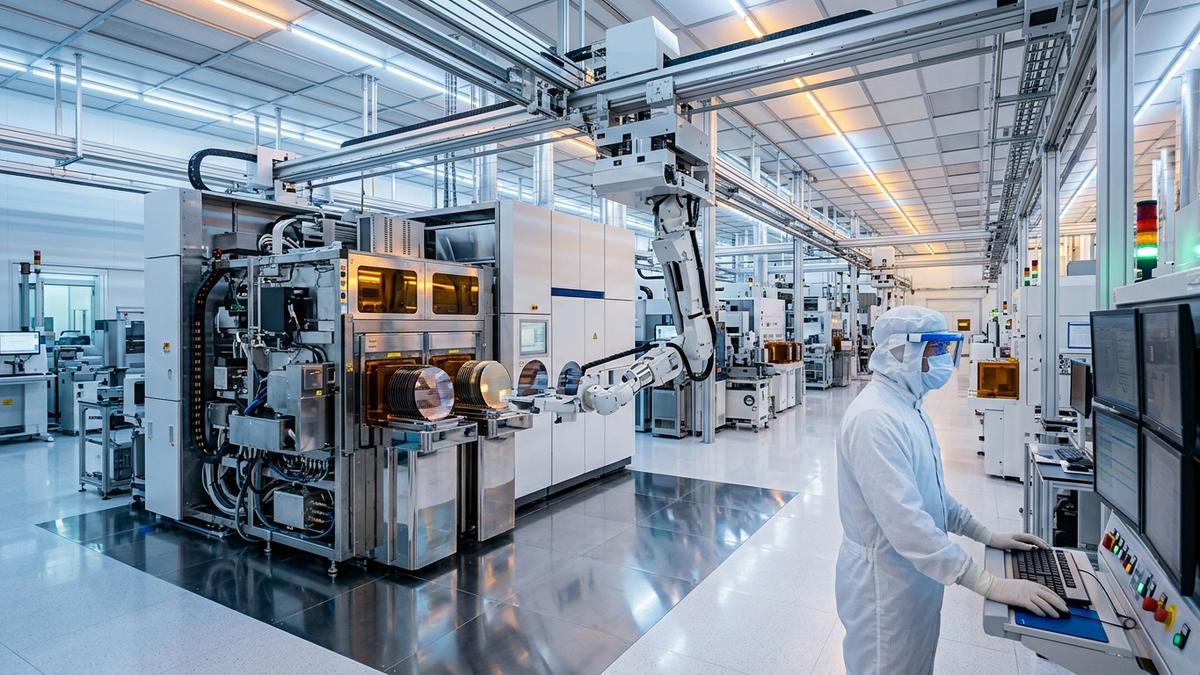
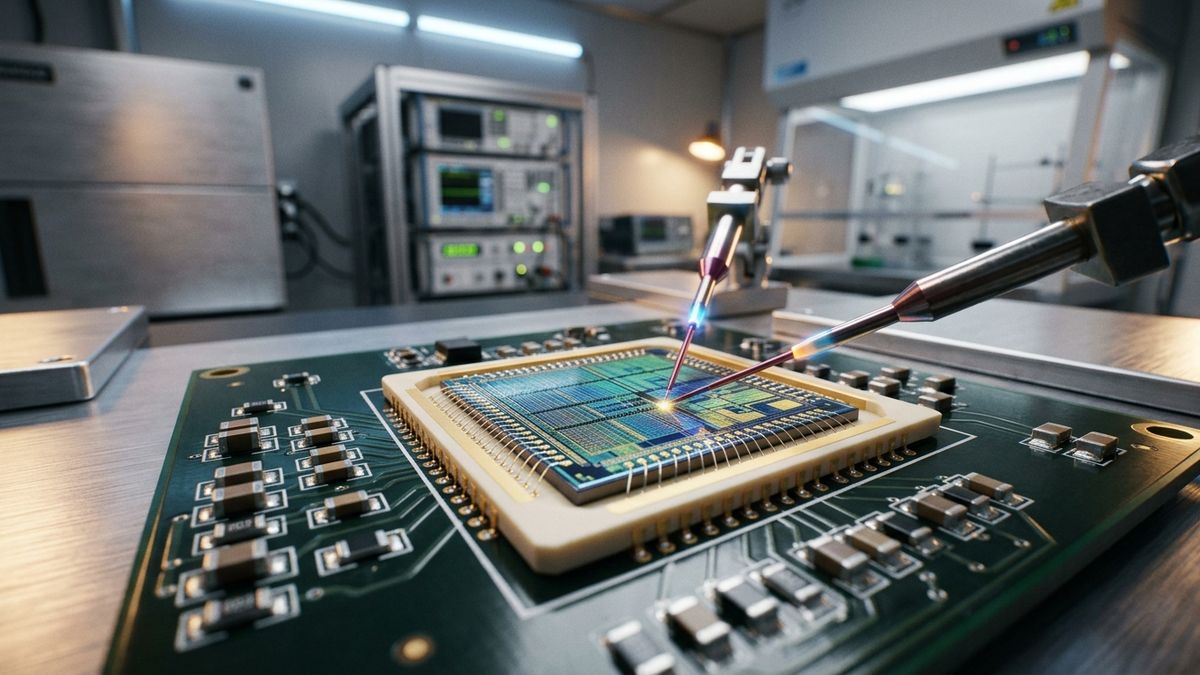
Simultaneously, engineering talent is migrating toward frontier hardware and deep-tech sectors. As physical systems, autonomous mobility, and semiconductor fabrication accelerate domestically, software engineers are increasingly crossing over into embedded systems, robotics firmware, and VLSI design. This talent diversification directly supports national initiatives like training 200 chip-design ventures under the India Semiconductor Mission and fuels physical AI ventures such as Ottonomy's autonomous delivery robotics hub in Noida.
The Enduring Value of Systems Thinking and Domain Mastery
While coding assistants excel at local code generation, they struggle with holistic, ambiguous, real-world context. An AI cannot interview an enterprise customer to uncover latent regulatory risks, nor can it balance complex trade-offs between network partitioning, eventual consistency, and financial accounting precision.
Engineers who thrive in this new landscape are combining three enduring capabilities:
- 1. First-Principles Systems Thinking: Deep mastery of operating systems, networking protocols, memory hierarchies, and distributed consensus algorithms.
- 2. Industry Domain Specialization: Intimate knowledge of specific vertical domains—such as core banking ledger reconciliation, clinical healthcare diagnostics, or avionics telemetry—allowing engineers to guide AI generation with precision.
- 3. Architectural Verification & Security Rigor: The discipline to treat AI code as untrusted input, establishing formal verification testbeds to prevent catastrophic outages.
The future of Indian engineering is not smaller—it is substantially more leveraged. A single senior engineer equipped with autonomous agents can now achieve the development throughput that previously required an entire twenty-person team. For engineers willing to leave the safety of basic syntax behind and embrace architectural mastery, the coming decade offers unprecedented creative impact.
Frequently Asked Questions
Are AI coding agents replacing Indian software engineers?
AI agents are not eliminating the software engineering profession, but they are radically changing what engineers do. Routine tasks like writing boilerplate CRUD APIs, generating unit tests, and debugging basic syntax errors are now automated. Engineers who adapt are acting as architects, orchestrators, and verifiers, overseeing fleets of AI coding agents rather than writing code line-by-line.
Which engineering roles are most vulnerable to automation?
Entry-level roles centered around repetitive tasks—such as manual QA testing, legacy code migration, routine web scraping, and basic maintenance scripting—face immediate disruption. Conversely, roles requiring distributed systems design, data security, hardware-software integration, and deep industry domain logic are seeing heightened demand.
How are Indian IT giants responding to this technological shift?
Companies like TCS, Infosys, Wipro, and HCLTech have deployed mandatory AI-augmented engineering workflows, equipping hundreds of thousands of developers with AI coding assistants while restructuring billing models away from headcount-based 'time and materials' toward fixed-price, outcome-driven milestones.
What new technical skills should Indian engineers prioritize today?
Engineers should prioritize distributed systems architecture, retrieval-augmented generation (RAG) pipelines, model fine-tuning and evaluation, cloud infrastructure security, API design, and formal verification methodologies to ensure AI-generated code meets enterprise reliability standards.
Primary Sources & Official References
- NASSCOM Strategic Review: Future of Tech Workforce and Generative AI Talent Transformation: Comprehensive workforce survey and enterprise tech adoption telemetry.
- Ministry of Electronics and Information Technology (MeitY): National AI Skills and Engineering Curricula Modernization Taskforce: Policy directives on engineering educational reforms.
- IEEE Software Engineering Journal: Productivity and Code Reliability Metrics of Agentic Coding in Enterprise Environments: Empirical research on software defect rates in AI-generated code.
- World Economic Forum (WEF): Future of Jobs Report & Indian Engineering Labor Dynamics: Longitudinal studies on technology-driven labor market transitions.