A consortium of 14 private space-tech startups led by Skyroot and Dhruva Space petitions the Telangana government to establish an integrated Space City near Hyderabad.
Executive Key Takeaways
- A consortium of 14 private space-tech startups led by Skyroot and Dhruva Space petitions the Telangana government to establish an integrated Space City near Hyderabad.
- A dedicated Space City is the decisive catalyst required to propel India from capturing 2% of the global space economy to our national target of 10% by 2030, declared IT & Industries Minister D. Sridhar Babu. Telangana has already recognized Space Technology as our fourth economic growth pillar alongside IT, Life Sciences, and Aerospace. We are actively evaluating land parcels near the Rajiv Gandhi International Airport corridor to build this world-class testing and integration cluster.
- Key Benchmark: **Environmental Testing Access** — 4 to 8 months lead time at external facilities
HYDERABAD — In a historic collective initiative that could fundamentally reshape India's commercial space ecosystem, a consortium of 14 premier private space-technology enterprises has submitted a comprehensive proposal to the Government of Telangana, urging the immediate establishment of a dedicated, world-class "Space City" hub in the Hyderabad metropolitan region.
The high-level representation was made during an intensive strategic roundtable held on August 29, 2026, with Telangana Minister for Information Technology, Electronics, and Industries, D. Sridhar Babu. The delegation featured industry frontrunners including launch-vehicle pioneer Skyroot Aerospace, small-satellite pioneer Dhruva Space, XDLINX Space Labs, EON Space Labs, TakeMe2Space, and deeptech innovators like Constelli, Cosmoserve Space, Abyom SpaceTech & Defence, Sanyark Space, Red Balloon Aerospace, AnduraX, Bluj Aerospace, Apollyon Dynamics, and Vassar Labs.
The ambitious proposal seeks to aggregate specialized testing, cleanroom manufacturing, environmental qualification, and sub-orbital flight validation within a unified high-security industrial zone. The initiative accelerates the nationwide hardware momentum spotlighted in India Approves ₹731 Crore Quantum & AI University in Amaravati: MeitY Backs 8.5-Acre Deeptech Research Hub and builds directly upon capital inflows explored in India’s Deeptech Ecosystem Gains Policy and Funding Momentum: Capital Pivots to Semiconductors, Quantum, and Hard Tech.
The Urgent Need for Shared Hard-Tech Infrastructure: Escaping CapEx Duplication
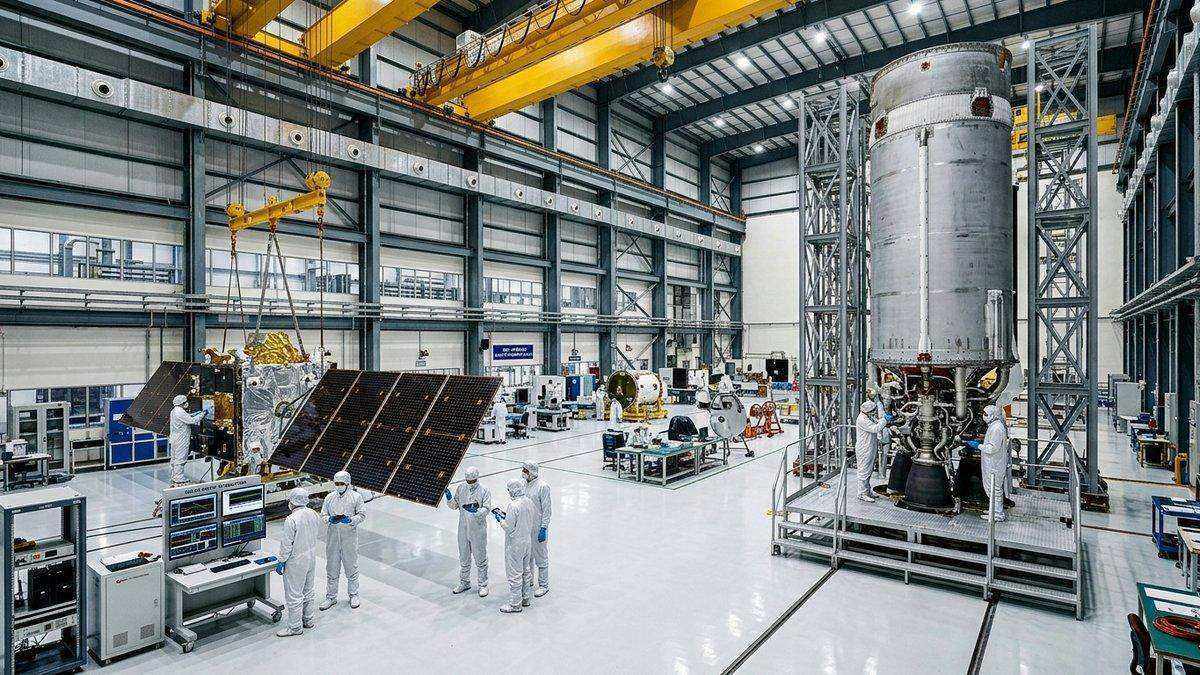
Over the past three years, India's private space sector has transitioned rapidly from conceptual prototypes to operational flight heritage. Skyroot Aerospace demonstrated sovereign private orbital capabilities through its Vikram rocket family and inaugurated its massive 200,000-square-foot "Infinity Campus" in Hyderabad. Concurrently, Dhruva Space has scaled satellite bus manufacturing and ground-station software for global telecom and remote-sensing operators.
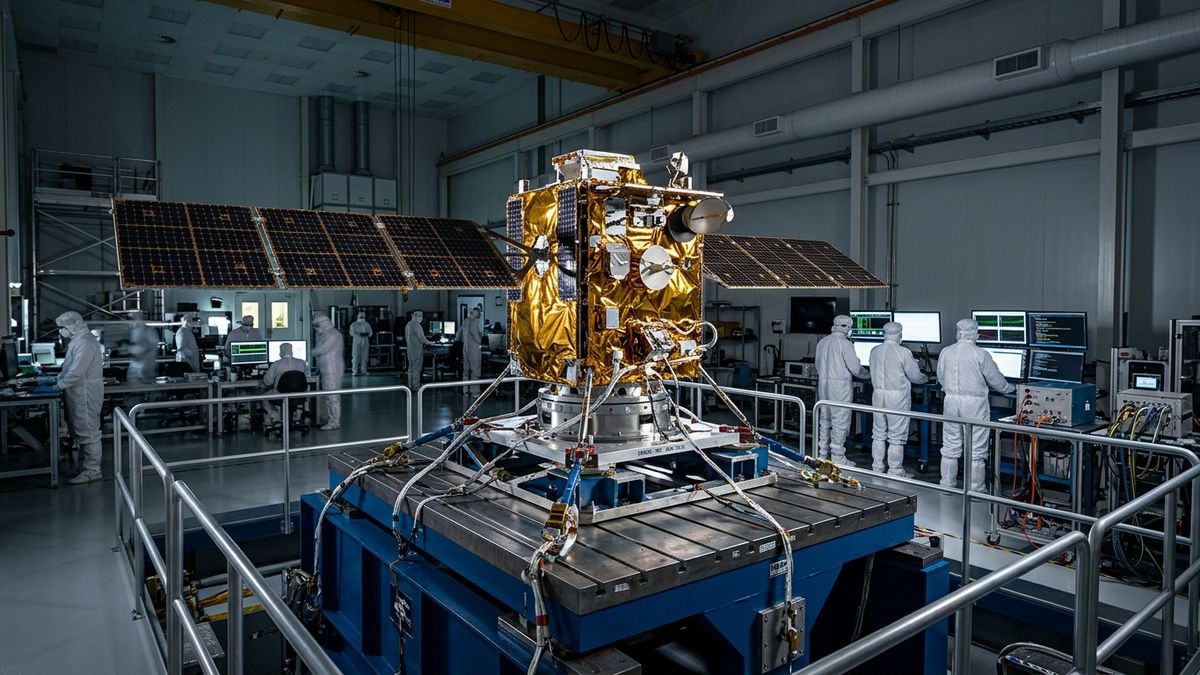
However, scaling from bespoke prototypes to high-cadence commercial manufacturing presents severe capital expenditure bottlenecks. Space hardware demands exhaustive, multi-million-dollar testing apparatus before any payload is cleared for flight:
- Thermal Vacuum (TVAC) Chambers: Simulating the extreme temperature oscillations (-150°C to +120°C) and high vacuum of Low Earth Orbit (LEO).
- Multi-Axis Shaker Tables: Subjecting satellites and stage adapters to 20G acoustic and mechanical vibrations experienced during atmospheric ascent.
- Electromagnetic Compatibility (EMC/EMI) Chambers: Validating that communications antennas and high-speed processing avionics do not cross-interfere.
Currently, individual startups either wait months for access to overbooked ISRO testing facilities or are forced to allocate scarce venture capital toward duplicating sub-scale test infrastructure.
"A dedicated Space City is the decisive catalyst required to propel India from capturing 2% of the global space economy to our national target of 10% by 2030,"declared IT & Industries Minister D. Sridhar Babu. "Telangana has already recognized Space Technology as our fourth economic growth pillar alongside IT, Life Sciences, and Aerospace. We are actively evaluating land parcels near the Rajiv Gandhi International Airport corridor to build this world-class testing and integration cluster."
Comparative Analysis: Space-Tech Infrastructure Ecosystems
The table below provides a detailed structural comparison between disparate, fragmented testing setups and the unified Space City framework proposed by the industry consortium:
| Operational Metric | Fragmented Startup Setup | Proposed Telangana Space City Hub | Strategic Industry Impact |
|---|---|---|---|
| Environmental Testing Access | 4 to 8 months lead time at external facilities | On-demand access to shared TVAC & shaker tables | 65% reduction in flight qualification cycle time |
| Capital Expenditure Allocation | $3M–$8M per startup spent duplicating test beds | Shared municipal-private testing consortium | Capital redeployed into proprietary R&D & payload IP |
| Cleanroom Availability | Isolated ISO Class 7/8 modular rooms | Unified ISO Class 5/7 integration cleanrooms | Capability to assemble multi-ton satellite constellations |
| Propulsion Test Cells | Remote, temporary agricultural leases | Certified static hot-fire bunkers with cryo handling | Safe, high-cadence qualification of liquid & hybrid engines |
| Regulatory & Export Clearances | Dispersed customs and licensing hurdles | Co-located IN-SPACe desk & bonded export zone | Rapid turnaround for international customer satellites |
Regional Competition and Positioning Hyderabad Among Global Hubs
The proposal emerges against intensifying regional competition across southern India. Andhra Pradesh recently outlined plans for a 15,000-acre aerospace city near Tirupati to leverage its proximity to ISRO's Satish Dhawan Space Centre (SDSC-SHAR) in Sriharikota. Meanwhile, Tamil Nadu is aggressively developing an aerospace park adjacent to the upcoming second national spaceport at Kulasekarapattinam.
However, Hyderabad possesses an unparalleled engineering and precision-manufacturing supply chain. The city already hosts over 1,000 precision engineering MSMEs, premier defense public sector undertakings (DRDO, BDL, Midhani), and cutting-edge aerospace joints like Tata Boeing Aerospace and Adani Defence.
By centralizing launch-vehicle integration, satellite manufacturing, optical payload development, and downstream data analytics within a single, interconnected Space City, Telangana aims to anchor the private space-tech economy firmly in Hyderabad, cementing its status as an international deeptech capital.