West Bengal Launches Quantum & Semiconductor Hub: CSIR-CGCRI Kolkata Unveils Deeptech Initiative for Photonics and Next-Gen Hardware
By Sanjay Patel | Published September 16, 2026 | 9 min read
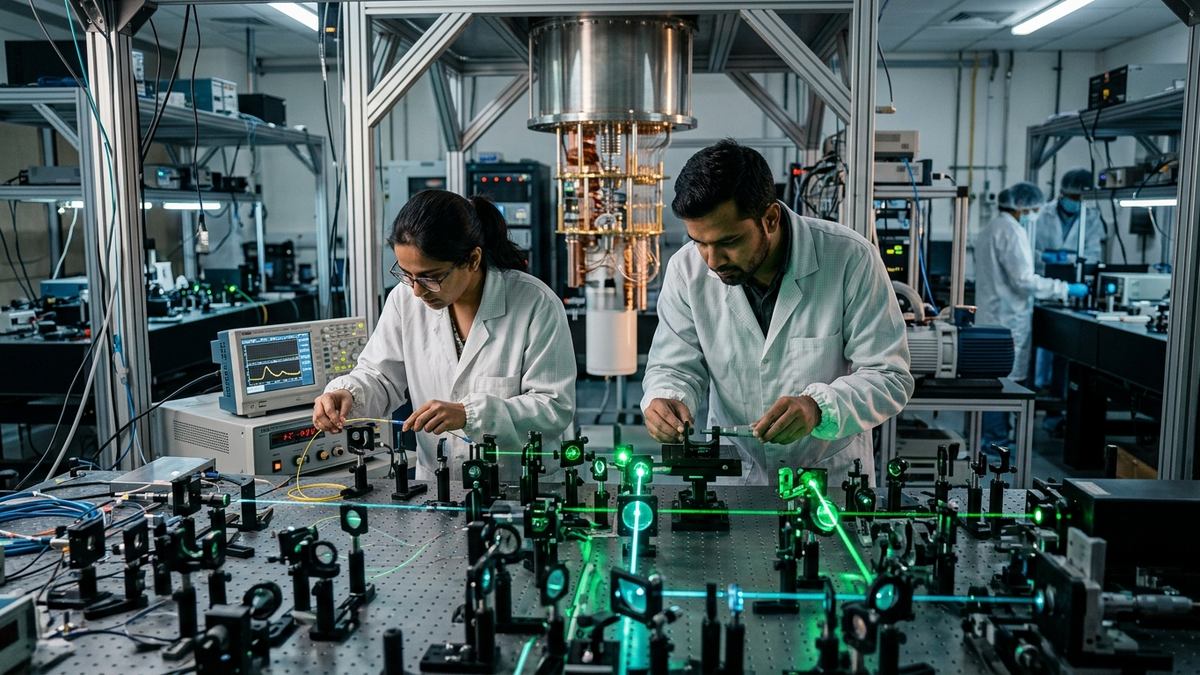
Kolkata strengthens India's deep-tech footprint with a dedicated quantum, semiconductor, and photonics innovation hub at CSIR-CGCRI, boosting national hardware sovereignty.
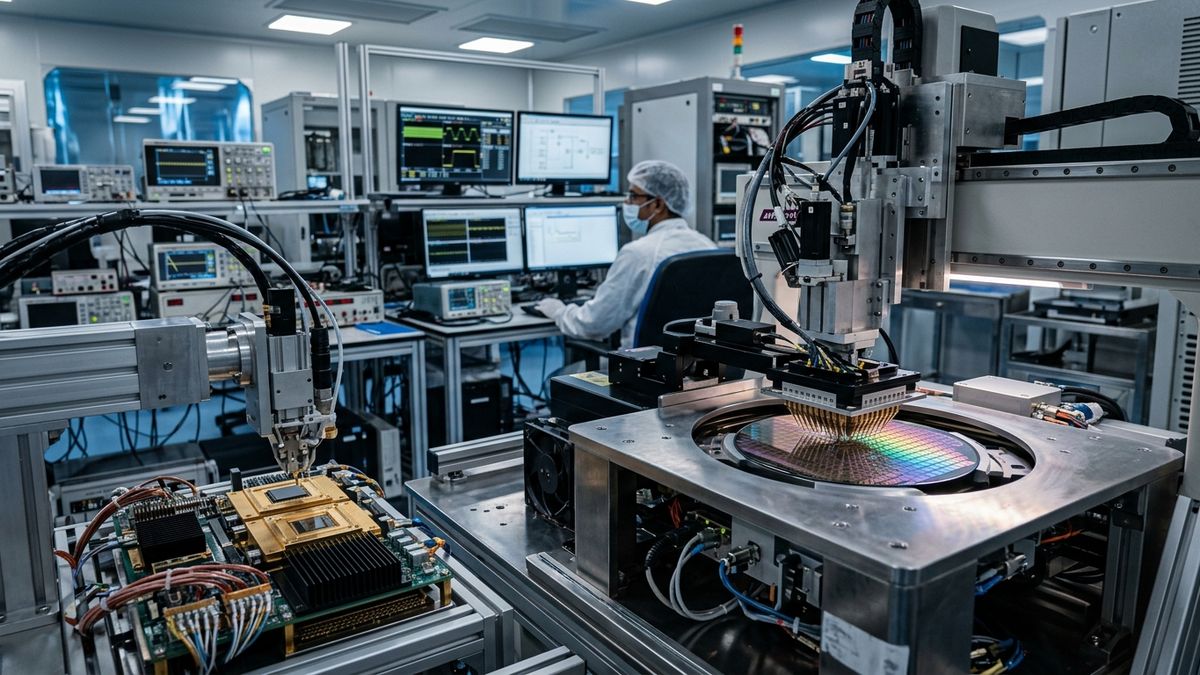
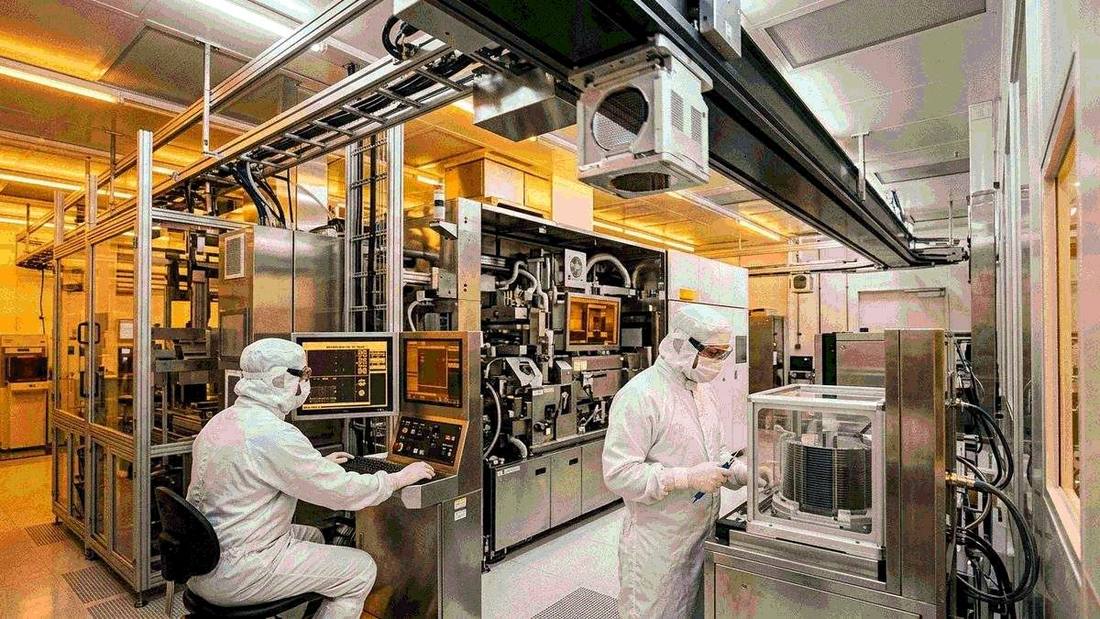
In a major strategic push to expand India’s deep-technology capabilities beyond traditional southern hubs, West Bengal has officially inaugurated a dedicated Quantum Technology, Semiconductor, and Photonics Innovation Hub hosted at the prestigious CSIR-Central Glass and Ceramic Research Institute (CSIR-CGCRI) in Kolkata. Backed by central and state innovation funding, the new facility establishes advanced optical test beds, specialty glass fiber drawing towers, cryogenic testing chambers, and semiconductor characterization laboratories designed to anchor indigenous research in quantum communications, integrated photonics, and advanced microelectronics packaging.
The establishment of the Kolkata hub marks a vital geographical diversification for India's high-tech manufacturing strategy. While Bengaluru, Chennai, and Hyderabad have historically dominated software and fabless VLSI design, Eastern India possesses a century-long legacy in fundamental physics, materials science, and optics. The CSIR-CGCRI facility harnesses this academic heritage to accelerate physical hardware innovation under the aegis of the National Quantum Mission (NQM) and the India Semiconductor Mission (ISM).
The Strategic Convergence: Quantum Communications, Photonics, and Specialty Glass
Silicon microchips are rapidly approaching physical thermodynamic limits, making classical copper interconnects a significant barrier to computational scaling in high-performance computing and artificial intelligence clusters. Integrated photonics—utilizing photons instead of electrons to transmit data at the speed of light—represents the next frontier of hardware acceleration.
CSIR-CGCRI Kolkata has long stood as an international leader in specialty optical fibers, radiation-resistant glasses, and ceramic substrates. The new hub focuses on commercializing these advanced materials into three synchronized domains:
1. Quantum Key Distribution (QKD) & Quantum Cryptography: Developing fiber-based and free-space quantum communication channels using single-photon emitters and entangled photon sources to secure critical national infrastructure, banking transactions, and defence communications against future quantum decryption threats.
2. Silicon Photonics & Optical Interconnects: Engineering hybrid optical-electronic transceivers that integrate directly with semiconductor dies, dramatically reducing energy consumption and latency in next-generation AI data centers.
3. Advanced Ceramic Substrates for Semiconductor Packaging: Fabricating ultra-high-thermal-conductivity ceramic packages and dielectric substrates capable of dissipating heat in high-power silicon carbide (SiC) and gallium nitride (GaN) automotive power electronics.
This hardware initiative complements the high-precision semiconductor test infrastructure highlighted in our analysis of how Teradyne expands automated semiconductor test capabilities in Bengaluru.
"Eastern India has produced some of the world's greatest quantum physicists and materials scientists,"noted senior research directors at CSIR-CGCRI during the hub's inaugural ceremony. "This new hub bridges the gap between deep laboratory physics and industrial manufacturing. By developing proprietary photonics chips, specialty optical waveguides, and quantum cryptographic transceivers, we are ensuring India controls the foundational physical hardware of the 21st century."
Infrastructure and Research Facilities at the Kolkata Hub
The facility houses specialized instrumentation tailored for cleanroom fabrication, post-silicon optical verification, and extreme-environment characterization:
* Class 100/1000 Cleanroom Microfabrication Bay: Equipped for photolithographic etching, thin-film optical coating, and precision laser micromachining of photonic waveguides.
* Specialty Optical Fiber Drawing Tower: Capable of producing multi-core photonic crystal fibers, erbium-doped optical amplifiers, and non-linear optical fibers essential for quantum entanglement distribution.
* Sub-Kelvin Cryogenic Characterization Lab: Dilution refrigerators reaching temperatures below 20 millikelvin to test superconducting qubit devices, single-photon detectors, and quantum sensors.
* Semiconductor Material Analysis Suite: High-resolution X-ray diffraction (XRD), transmission electron microscopy (TEM), and time-domain reflectometry instruments to analyze lattice defects in emerging wide-bandgap semiconductors.
This comprehensive infrastructure aligns with national efforts to establish sovereign hardware capabilities, as examined in our study of how quantum and AI infrastructure gain momentum across Indian deeptech.
Operational Matrix: CSIR-CGCRI Quantum & Semiconductor Hub
The structured matrix below outlines the technology verticals, research capabilities, and target industry applications of the Kolkata facility:
| Technology Vertical | Core Lab Infrastructure | Research & Development Focus | Target Strategic Applications |
|---|---|---|---|
| Quantum Communications | Single-photon detectors & sub-Kelvin cryostats | Entangled-photon generation & QKD transceivers | Tamper-proof defence networks, satellite QKD, secure BFSI links |
| Integrated Photonics | Thin-film deposition & optical waveguide etching | Chip-to-chip optical interconnects & micro-resonators | Ultra-low latency data center transceivers, AI accelerator interconnects |
| Specialty Optical Fiber | Multi-meter fiber drawing towers & doping furnaces | Radiation-hardened and hollow-core photonic crystal fibers | Aerospace avionics, harsh-environment industrial sensing, subsea links |
| Semiconductor Packaging | High-temperature sintering kilns & thermal analyzers | Ceramic substrates (AlN, Si3N4) for high-voltage power ICs | EV powertrain inverters, railway traction, renewable grid converters |
Catalyzing Eastern India's Deeptech Ecosystem
The launch of the CSIR-CGCRI hub is expected to ignite a cluster of deeptech hardware startups in Kolkata, leveraging premier nearby academic institutions such as IIT Kharagpur, the Indian Association for the Cultivation of Science (IACS), and S.N. Bose National Centre for Basic Sciences.
By aligning state-level industrial policy with national scientific missions, West Bengal is carving out a distinctive competitive advantage in deep physical technology. As commercial silicon fabs and packaging plants take shape across India, the specialized photonics and quantum capabilities developed in Kolkata will provide critical sovereign components for the nation's high-tech future.