India Unveils Homegrown Broadband Chip ‘Vihaan-I’: Chennai Startup Aheesa Digital Innovations Pioneers Indigenous RISC-V Telecom Silicon
By Sanjay Patel | Published September 20, 2026 | 8 min read
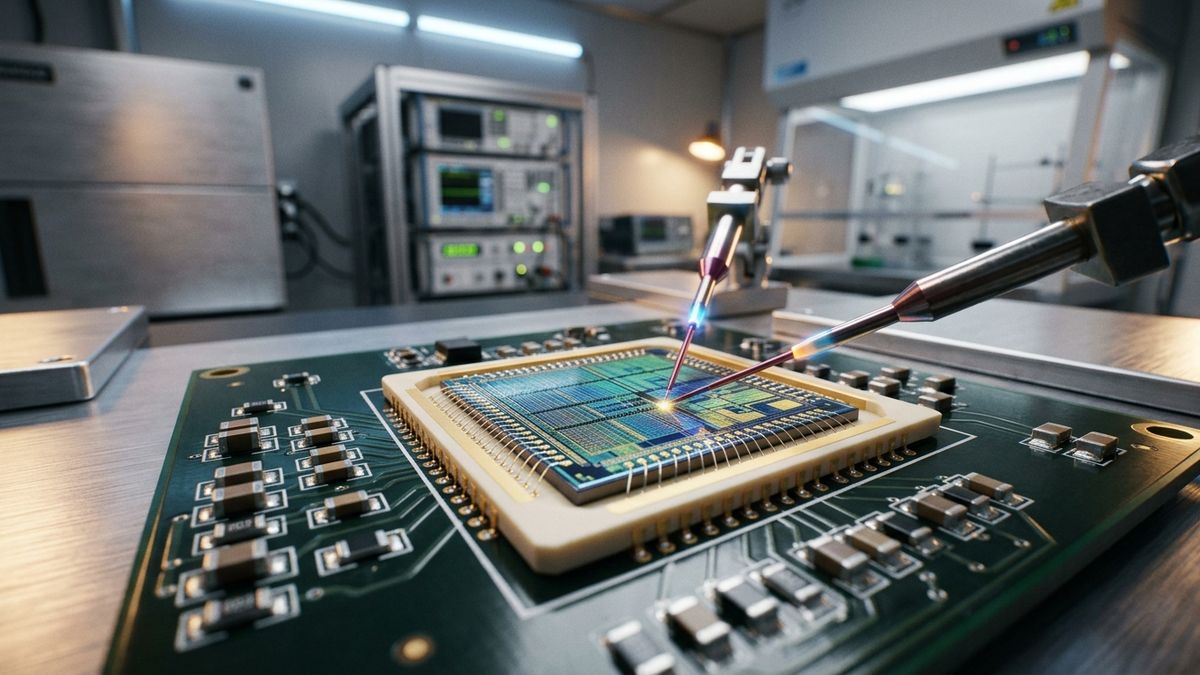
Chennai fabless startup Aheesa Digital Innovations unveils Vihaan-I, an indigenous RISC-V broadband processor engineered for carrier-grade telecom, FTTH routers, and secure networking hardware.
In a major milestone for India's sovereign semiconductor and communications roadmap, Chennai-based fabless startup Aheesa Digital Innovations has officially unveiled ‘Vihaan-I’, an indigenous high-performance broadband communication microprocessor designed entirely on open-standard RISC-V architecture. Engineered specifically for carrier-grade telecom systems, optical network terminals (ONT), and enterprise routers, Vihaan-I represents one of India's first commercially viable, custom-designed networking processors ready for large-scale domestic deployment.
The development of Vihaan-I arrives at a decisive moment as India accelerates nationwide high-speed broadband penetration under BharatNet Phase-III and expands optical fiber connectivity to hundreds of thousands of villages and commercial corridors. By delivering an indigenous silicon alternative to legacy imports from North America and East Asia, Aheesa Digital is directly addressing national hardware security requirements while lowering equipment production costs for domestic telecom original equipment manufacturers (OEMs).
Overcoming the Telecom Silicon Import Dependency
For decades, Indian telecom equipment manufacturers have relied almost exclusively on imported application-specific integrated circuits (ASICs) and network system-on-chips (SoCs) supplied by global giants like Broadcom, Qualcomm, and MediaTek. While these commercial chipsets offer high throughput, they present significant strategic dependencies:
- Hardware Sovereignty & Firmware Transparency: Proprietary closed-source microarchitectures prevent deep security audits of low-level firmware, raising long-term national security vulnerabilities across critical telecom infrastructure.
- Supply Chain Fragility: Global fab allocation shocks and geopolitical trade restrictions have historically disrupted delivery schedules for Indian router and gateway manufacturers.
- Cost Structure Pressures: High silicon licensing royalties and import duties inflated the unit economics of deploying optical network units across rural and semi-urban corridors.
Vihaan-I addresses each of these pain points by offering an open, transparent, and auditable RISC-V core pipeline combined with custom hardware accelerators tailored to Indian operational conditions, wide-voltage fluctuations, and high ambient operating temperatures.
"True digital sovereignty cannot exist without silicon-level self-reliance,"remarked semiconductor industry veterans during the unveiling. "Vihaan-I demonstrates that Indian fabless startups have matured beyond conceptual university research into delivering production-ready, carrier-grade processors capable of competing on performance, power efficiency, and security."
This breakthrough builds on the momentum highlighted in recent industry reports on Intel spotlighting India’s 20% share in global semiconductor chip-design talent and NXP projecting India's rapid evolution into a premier smart-tech consumer market.
Technical Architecture and Microarchitectural Highlights
The Vihaan-I system-on-chip features a multi-core 64-bit RISC-V instruction set architecture tailored specifically for high-throughput packet processing, packet inspection, and deterministic optical network synchronization:
| Architectural Metric | Vihaan-I Specifications | Standard Industry Equivalent | Strategic Advantage |
|---|---|---|---|
| Core Architecture | Multi-Core 64-bit RISC-V (RV64GC) | Proprietary ARM Cortex-A53 | Royalty-free open architecture |
| Target Workload | GPON / 10G-PON ONT, CPE Routers | Consumer Wi-Fi & Gateway SoCs | Native carrier-grade hardware packet engine |
| Hardware Acceleration | AES-256, SHA-3, Wire-Speed NAT | Software-driven cryptographic engines | Wire-speed encryption without CPU throttling |
| Power Efficiency | < 4.5W under peak continuous routing | 7.5W – 10W typical | Extended lifespan in passively cooled enclosures |
| Operating Envelope | -40°C to +85°C industrial grade | 0°C to +70°C commercial grade | Engineered for Indian outdoor telecom enclosures |
Dedicated Packet Processing and Cryptographic Hardware Engines
Unlike general-purpose application microprocessors that suffer latency spikes when handling intensive network packet inspection, Vihaan-I integrates dedicated hardware state machines for:
- Wire-Speed Network Address Translation (NAT): Offloading IPv4/IPv6 packet translation directly onto on-chip logic gates, freeing host processor cores for application services.
- Hardware-Isolated Cryptographic Security: Dedicated cryptographic accelerator executing AES-256, RSA-4096, and SHA-3 hashing in hardware, preventing timing-based side-channel attacks.
- Optical Link Telemetry: Real-time laser diagnostic monitoring to detect fiber degradation, power attenuation, and optical reflection anomalies before link failure occurs.
Alignment with MeitY DLI and India Semiconductor Mission
The realization of Vihaan-I was expedited by the Design-Linked Incentive (DLI) scheme administered under the Ministry of Electronics and Information Technology (MeitY) and the India Semiconductor Mission (ISM). Under DLI, fabless startups receive up to 50% fiscal reimbursement of eligible design expenditure alongside subsidized access to advanced electronic design automation (EDA) tools and multi-project wafer (MPW) prototype fabrication shuttles.
As domestic electronic manufacturing services (EMS) providers such as Dixon Technologies, Tejas Networks, and HFCL scale manufacturing lines for 5G fixed wireless access (FWA) and GPON terminals, Vihaan-I provides an immediate, qualified domestic bill-of-materials component. Furthermore, with Micron scaling up Sanand assembly and testing facilities and domestic foundries taking shape in Gujarat and Assam, the downstream packaging of Indian-designed chips is rapidly approaching complete localization.
Commercial Deployment Timeline & Industry Outlook
Aheesa Digital Innovations has initiated commercial sampling of Vihaan-I to domestic telecom equipment manufacturers, with field qualification trials scheduled across state-level BharatNet deployments through Q4 2026. Mass production shipments are targeted for the first half of 2027, backed by reference design boards and carrier-grade OpenWrt software development kits.
As telecom operators upgrade metropolitan networks to multi-gigabit speeds, the arrival of Vihaan-I establishes a blueprint for domestic fabless innovation, proving that Indian silicon engineering can lead from the silicon substrate up to the global communications edge.
Frequently Asked Questions
What is the Vihaan-I broadband chip and who developed it?
Vihaan-I is an indigenous broadband communication microprocessor developed by Chennai-based fabless semiconductor startup Aheesa Digital Innovations, built on open-standard RISC-V architecture to power carrier-grade networking equipment.
Which applications and equipment will deploy the Vihaan-I processor?
The chip is optimized for Fiber-to-the-Home (FTTH) Optical Network Terminals (ONT), enterprise broadband switches, Wi-Fi 6/7 consumer customer premises equipment (CPE), and rural telecom infrastructure under BharatNet.
Why is indigenous silicon critical for India's telecom infrastructure?
Using homegrown silicon mitigates hardware-level backdoors, enhances national cyber sovereignty, lowers reliance on foreign semiconductor vendors, and reduces equipment bill-of-materials costs for Indian telecom operators.
What semiconductor architecture does Vihaan-I utilize?
Vihaan-I is based on the royalty-free, open-standard RISC-V instruction set architecture (ISA), featuring custom hardware acceleration extensions for high-throughput packet routing, symmetric encryption, and optical signal telemetry.
Primary Sources & Official References
- Aheesa Digital Innovations: Technical Brief & Product Architecture of Vihaan-I RISC-V SoC: Official product datasheet and microarchitectural specification release.
- Ministry of Electronics and Information Technology (MeitY): Design-Linked Incentive (DLI) Progress Report: Central policy guidelines supporting indigenous fabless ventures.
- Centre for Development of Telematics (C-DOT): Sovereign Broadband Hardware Certification Guidelines: Telecommunications hardware compliance frameworks.
- India Semiconductor Mission (ISM): Fabless Semiconductor Incubation Benchmarks: Strategic documentation on national fabless design scale.